
RAIPUR: Chhattisgarh has launched the DWEEPTI Yojana (Decentralised Women Empowerment on Energy and Policy for Transformative Inclusion), a first of its kind initiative that places rural women's self help groups at the centre of the state's expanding solar power sector, enabling them to become vendors, technicians, managers and entrepreneurs.
Developed by the state's Panchayat and Rural Development Department in collaboration with technical partner Transform Rural India under the Green Economy Transition Mission, the scheme makes Chhattisgarh the first state in the country to adopt a women led distributed renewable energy policy, officials told this newspaper.
To kickstart the policy, 13 Cluster Level Federations across 12 districts have already been registered as authorised vendors under the Central government's PM Surya Ghar Muft Bijli Yojana in partnership with the Chhattisgarh State Power Distribution Company Limited (CSPDCL), they added.
To ensure financial accessibility, self help group (SHG) members are being offered flexible loans for rooftop solar installations.
This financing model aligns with the Prime Minister's Lakhpati Didi vision, opening up skill-based livelihood opportunities beyond traditional SHG activities.
"Women's role in the renewable energy space has so far remained limited, seen merely as recipients rather than active stakeholders," said Shri Bhim Singh, Secretary of the Panchayat and Rural Development Department. "The DWEEPTI Yojana marks a shift, positioning women at the heart of the sector and enabling self reliance."
Kabirdham district has emerged as the flagship site for the early implementation of the scheme. The Zila Panchayat Kabirdham (Bihan) facilitated the registration of the Vande Mataram Cluster Level Federation as an authorised solar vendor.
With technical support from Tata, nearly 35 women from local SHGs underwent hands on technical training in rooftop solar installation, forming the first cadre of "Solar Didis".
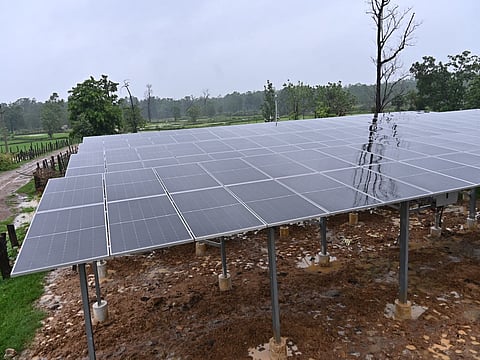
The state's first rooftop solar system under the initiative was installed in Samnapur village in Kabirdham.
"This work has opened a new livelihood opportunity for us. The scheme gives us confidence as becoming a sustainable source of income," said Anjani Patel of the Mata Bhawani Self Help Group, one of the trained technicians.
Following the early success in Kabirdham, the state government plans to expand the DWEEPTI Yojana framework to the remaining districts, establishing a replicable model for clean energy adoption driven by women's leadership.
