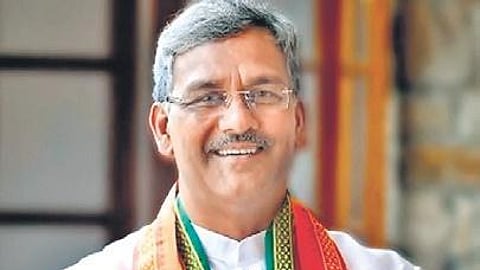

DEHRADUN: With the 2027 Assembly elections approaching, the Bharatiya Janata Party (BJP) in Uttarakhand has begun a significant strategic overhaul, assigning former Chief Minister and Haridwar MP Trivendra Singh Rawat and Nainital MP Ajay Bhatt the task of reviving the party's prospects in constituencies where it underperformed in the last Assembly polls.
The recent visit of the party's national leadership to Dehradun has sparked intense political speculation, with analysts divided over whether the changes reflect proactive electoral planning or precautionary measures driven by internal concerns.
The central leadership's outreach, led by newly appointed national office bearers, played a key role in assessing the party's organisational and electoral standing in the state. The exercise resulted in immediate changes, including the appointment of a new state in charge.
The impact of the visit is already evident within the organisation. The first major structural change was the transfer of state General Secretary (Organisation) Ajay Kumar to Rajasthan.
Much of the deliberation focused on the party's electoral vulnerabilities. The BJP's performance in the previous Assembly elections, particularly in Haridwar and Udham Singh Nagar districts, emerged as a key area of concern.
In Haridwar district, the party lost eight of the 11 Assembly seats. In Udham Singh Nagar, it was defeated in five of the nine constituencies. The setbacks, along with losses in segments falling under the Haridwar and Nainital Lok Sabha constituencies, have prompted a tactical shift.
To address these weaknesses, the party leadership has entrusted Rawat and Bhatt with the responsibility of strengthening the BJP's position in the identified Assembly segments.
Ahead of the leadership's visit, the state unit was reportedly facing growing discontent. Social media was rife with speculation about differences between several MLAs and the government. Among the most discussed figures was MLA Arvind Pandey, whose public criticism had occasionally put the administration in an uncomfortable position.
However, the leadership employed what many described as "dinner diplomacy" to project unity within the party. Meetings between former Chief Minister Trivendra Rawat, MP Anil Baluni and Pandey, followed by a widely circulated photograph of Chief Minister Pushkar Singh Dhami and Pandey together, were seen as a clear signal of reconciliation.
During the visit, leaders who had expressed dissatisfaction, including Pandey and Bishan Singh Chuphal, were not only welcomed but also consulted for feedback, signalling a pause in the party's internal discord.
According to senior political analyst Avikal Thapliyal, the BJP's decision to replace state General Secretary Ajay Kumar provided a "safe exit" after a six year tenure marked by recurring controversies. He said that, with the ongoing organisational restructuring, further changes, including those involving the state president and state in charge, remained likely in the coming months.
As the BJP prepares for the 2027 Assembly elections, its dual strategy of strengthening organisational discipline and focusing on electorally weak constituencies suggests a shift from internal consolidation to aggressive expansion. Whether the approach translates into electoral success remains to be seen, but the party's determination to leave nothing to chance is evident.
