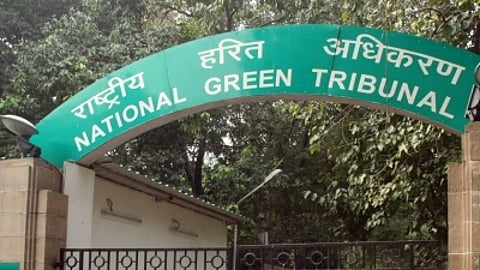

RANCHI: In a significant development, the National Green Tribunal (NGT) has formed a three-member joint committee to investigate large-scale pollution and the recent incident of fish deaths reported in the Subarnrekha River near Jamshedpur.
The order was passed by a Bench comprising Justice Sheo Kumar Singh, Judicial Member, and Expert Member Ishwar Singh on May 20.
The matter is scheduled for further hearing on August 10, 2026. The case concerns the worsening condition of the Subarnarekha River, highlighted by an incident reported on April 1, 2026, when hundreds of dead fish were allegedly discovered floating near Babudih Lal Bhatta in Jamshedpur.
Residents in the area also complained of a strong foul odour emanating from the river, raising serious concerns over water contamination, environmental degradation, and potential risks to public health.
According to the application, the fish deaths were likely caused by severe depletion of dissolved oxygen levels resulting from the discharge of untreated sewage and industrial effluents into the river.
The plea highlighted that increased Biological Oxygen Demand (BOD), Chemical Oxygen Demand (COD), and possible ammonia contamination may have created conditions unsuitable for aquatic life.
The applicant further alleged that despite repeated concerns and judicial interventions over the years, major urban local bodies, including Jamshedpur Notified Area Committee (JNAC), Mango Municipal Corporation, Jugsalai Municipality, and Adityapur Municipal Corporation, have failed to establish adequate sewage treatment infrastructure.
The application also referred to reports indicating that polluted water from multiple drains continues to enter the river untreated.
Taking note of the allegations, the Tribunal observed that a substantial question relating to the environment had been raised and issued notices to the respondents.
To ascertain the factual position, the NGT constituted a three-member Joint Committee and sought a report within four weeks.
“We deem it just and proper to call a Fact-Finding Report, constitute a Joint Committee consisting of the following members -- one representative from District Commissioner, East Singhbhum, one representative nominated by the Director, CPCB, Regional Office, one representative nominated by the Member Secretary, Jharkhand SPCB,” stated the NGT order.
The Committee is directed to visit the site and submit the factual and action taken report within four weeks. The state PCB will be the nodal agency for coordination and logistic support, it added.
The application was filed by advocate Pratik Sharma, who has been actively involved in raising public interest issues relating to environmental protection, governance, transparency, and cyber law through legal and civic interventions.
The matter was argued before the Tribunal by Advocate Saurabh Sharma.
Environmental observers view the Tribunal's intervention as an important step towards addressing long-standing concerns regarding sewage discharge, industrial pollution, ecological degradation, and public health risks associated with the Subarnrekha River, which serves as a vital water resource for large populations across Jharkhand, West Bengal, and Odisha.
