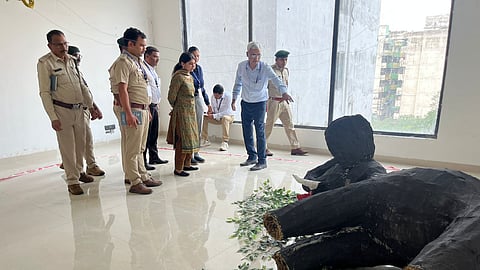

RAIPUR: In order to make wildlife conservation more robust and effective, forest officers and veterinary experts from various forest divisions across Chhattisgarh have been imparted wildlife forensic training.
The programme’s objective was to equip officials with scientific methods to investigate elephant deaths, identify wildlife crimes, and strengthen overall conservation efforts.
Officials were instructed to view the place a dead elephant is found in the forest as a potential crime scene and not merely treat it as a natural casualty.
Chhattisgarh currently has a roaming elephant population of around 450. The training programme was specifically organised considering the increasing elephant activity in districts like Raigarh, Jashpur, Korba, and Surajpur.
Experts emphasised that understanding the precise and scientifically accurate causes of elephant deaths will greatly aid in preventing future casualties and making wildlife conservation strategies more impactful.
“The exercises and techniques learned will vastly upgrade the forest department’s capabilities in forensic investigation, disease surveillance, and wildlife crime control.
The state government places the highest priority on wildlife conservation,” said Kedar Kashyap, the state forest and climate change minister. Specialised training was provided on securing the incident site, preserving evidence, identifying signs of poisoning, poaching, or other suspicious activities and following standardised scientific investigation protocols.
Subject matter experts familiarised the forest officials and veterinarians with elephant anatomy, health management, and scientific post-mortem procedures.
The participants were trained in the safe collection, preservation, and transport of biological samples for laboratory testing. Special emphasis was placed on compiling legally sound evidence for wildlife crimes and maintaining the strict chain of custody required for judicial proceedings.
The practical hands-on field training covered performing dummy autopsies, collecting blood and tissue samples, etc.
Scientific ways
The move will equip the officials with scientific methods to probe elephant deaths and identify crimes
Officials told to treat sites of jumbo deaths as potential crime scenes
Initiative follows increased jumbo activity in Raigarh, Jashpur, Korba & Surajpur
