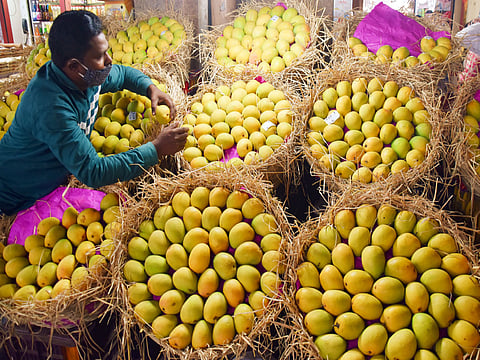

Nepal has placed restrictions on the import of mangoes from India due to concerns about excessive pesticide residues and inadequate quarantine facilities in border areas of Nepal side.
Indian mango traders based in West Bengal, who previously exported mangoes to Nepal, have noted that the new regulations set by the Nepalese administration require phytosanitary standards to align with those of the European Union.
This requirement is expected to make Indian mangoes more expensive and economically unfeasible for export to Nepal.
Nepal has joined Japan, the EU, and Saudi Arabia in rejecting Indian mangoes and agricultural exports over food safety concerns.
As a result of the ban, reports indicate that local markets in Nepal are now filled with domestically grown mangoes. The demand for mangoes typically rises during the summer season. Officials have stated that the government restricted mango imports due to high pesticide levels and the lack of quarantine facilities in border areas, particularly in the Madhesh province.
The import restrictions on Indian mangoes have benefited local farmers, as they no longer have to compete with Indian fruit this season, according to AjayaGyawali, an information officer at the Ministry of Land Management, Agriculture, and Cooperatives in Madhesh province.
However, Indian mango exporters in West Bengal claim that the new quarantine rules have made exporting mangoes more expensive and complicated.
“New regulations from the Nepalese government require mangoes to undergo hot water immersion treatment (HWT), similar to what we need to comply with EU phytosanitary rules,” said Mrinal Sinha of DMR Green Valley Agrofresh, who recently received an order to supply 10 metric tonnes of mangoes to Nepal.
The HWT is a post-harvest technique used to eliminate pests (such as fruit fly larvae) and prevent fungal diseases like anthracnose and stem-end rot. This process involves immersing mature, green mangoes in heated water (at temperatures between 46°C and 55°C) for a specific duration, and it generally adds around 40 hours to the treatment of 10 metric tonnes.
“It will increase the cost of treatment and transport, especially with rising fuel prices and other challenges, so I have declined the order,” Sinha stated.
Experts view this situation as an indication of deteriorating political relations between the two countries. Recently, the Prime Minister of Nepal claimed that India had encroached on Nepali land. India's relationship with Nepal has been strained in recent years.
Due to the limited supply of mangoes, prices in the Nepali market have increased, which may soon cause difficulties for local consumers.
BhuvaneshwarPurbe, general secretary of the Fruit and Vegetable Traders' Association in Janakpurdham, suggested that halting Indian imports could lead to shortages in the domestic market. He advised the government to strengthen quarantine systems and allow Indian fruits into the Nepalese market after proper quality testing, rather than imposing a complete ban on imports.
India exports approximately 12,000 tonnes of mangoes to Nepal, valued at around USD 3.6 million. The geographical proximity and low tariffs make it economically advantageous for traders to export mangoes to Nepal.
