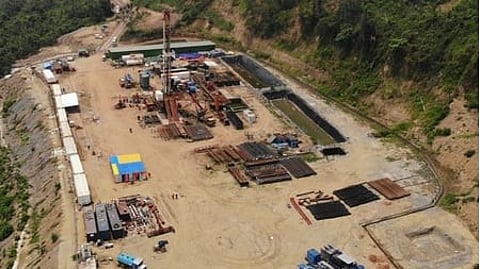

GUWAHATI: The tripartite memorandum of understanding (MoU) signed among Assam, Nagaland and the Central government in New Delhi on Thursday for the exploration and production of crude oil and natural gas along the boundary of the two states has met with opposition.
The Working Committee of the Naga National Political Groups (WC of NNPGs), an umbrella body of seven rebel groups, said any attempt to explore or extract natural resources, including petroleum, in Naga areas would be “illegal and against the agreed principles” until the “Indo-Naga” political settlement is signed.
The Centre had signed the “Agreed Position” with the conglomerate on November 17, 2017.
Referring to Part VII of the Agreed Position, the WC of NNPGs said in a statement that ownership and transfer of land and its resources, including mines, minerals, petroleum and natural gas, would vest in the post-solution Nagaland government and the proposed Nagaland Tatar Hoho.
“…Unless Indo-Naga political settlement is officially signed across the table, any attempt to explore natural resources in Naga areas anywhere is illegal and against the agreed principles,” the WC of NNPGs said, adding that until such time, it would ensure that no company extracted crude petroleum reserves from Naga soil.
The WC of NNPGs further stated that revenue sharing between Nagaland and Assam, or with any other state, would serve the interests of a few seeking profit rather than the interests of the Nagas.
“The so-called Disturbed Area Belt is legally and historically an integral part of Naga homeland. Assam is not sharing its oil revenue with Nagaland, so why would Nagaland government share its wealth with the Assam government? The resentment of Nagaland tribes and civil societies against oil exploration and extraction is justified,” the WC of NNPGs said.
Union Home Minister Amit Shah had stated that the agreement removed a major obstacle to realising Prime Minister Narendra Modi’s vision of a prosperous Northeast. He expressed confidence that it would open up opportunities for oil and natural gas exploration as well as mineral mining.
“He (Shah) noted that both states decided that they would not allow any obstacle to India’s oil exploration but would advance on the path of mutual cooperation, as these resources constitute national wealth,” an official statement said on Thursday.
