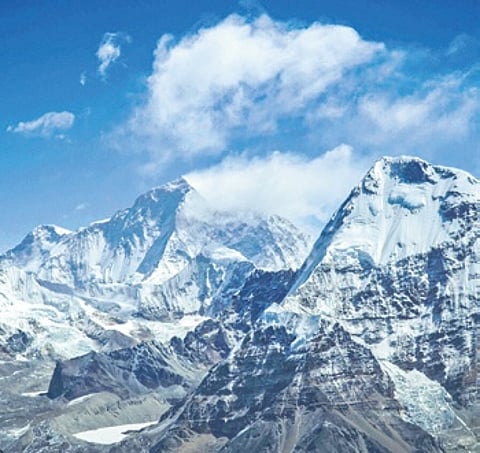

DEHRADUN: Often described as the world’s “Third Pole”, the Himalayas are showing signs of stress, with rising temperatures, erratic snowfall, shrinking glaciers and growing human pressure threatening one of Asia’s most vital ecological systems.
Environmental scientist and academic Prof SP Sati said the health of the Himalayas is deteriorating rapidly due to a combination of climate change, altered weather patterns and mounting pollution.
“The Himalayas today face several major challenges. Climate change, changes in the seasonal cycle and plastic waste are directly affecting the glaciers,” Prof Sati said.
Scientists warn that the crisis is not confined to the mountains alone. Himalayan glaciers feed several major Asian rivers and support millions of people downstream. Any disruption in this fragile system could have serious consequences for water security, agriculture, weather patterns and disaster risks across the region.
Dr Manish Mehta, senior scientist and glaciologist at the Wadia Institute of Himalayan Geology, said tourist pressure has increased sharply across the Himalayan belt, including Uttarakhand, Himachal Pradesh and Ladakh.
“The number of tourists coming to the Himalayas is very high, and the pressure is also high,” Dr Mehta said.
According to experts, nearly 12,000 small and large glaciers exist across the Himalayan region. Many of them are retreating at an alarming pace. Studies have shown that glaciers are shrinking by 1 to 20 metres every year, depending on their size, location and exposure.
Dr Mehta said glaciers from Uttarakhand and Himachal Pradesh to Ladakh and the North-East are retreating.
One of the biggest concerns is the change in snowfall patterns. Earlier, heavy snowfall during December, January and February helped glaciers accumulate and retain ice. Now, snowfall is shifting towards March, April and May.
