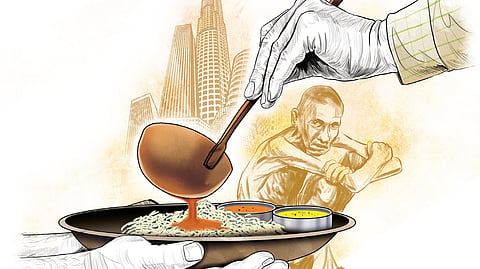

SRINAGAR: In a cause for concern, about 6.39 lakh people belonging to around 1.28 lakh families in Jammu and Kashmir are living in multidimensional poverty, with Ramban, Reasi and Kishtwar districts in the Union Territory being the worst affected.
According to NFHS-5-based estimates for 2019-21 released in July 2023, nearly 6.39 lakh persons belonging to around 1.28 lakh families in Jammu and Kashmir were identified as living in multidimensional poverty.
The overall poverty headcount ratio stood at 4.80 per cent for the UT.
Ramban recorded the highest Multidimensional Poverty Head Count Ratio at 14.86 per cent, followed by Reasi (11.40 per cent), Kishtwar (10.59 per cent), Udhampur (10.23 per cent) and Rajouri (8.07 per cent), indicating the need for focused interventions and enhanced service delivery in these districts.
The Jammu district registered the lowest poverty ratio at 0.49 per cent, followed by Srinagar (1.34 per cent), Shopian (1.54 per cent), Pulwama (2.09 per cent) and Samba (2.30 per cent), reflecting substantial improvements in socio-economic and developmental indicators.
According to officials, in terms of absolute numbers, Baramulla accounted for the highest estimated multi-dimensionally poor population, followed by Udhampur, Rajouri, Kupwara and Ramban, underscoring the importance of district-specific strategies that address both the incidence and intensity of poverty.
The officials disclosed that the Multidimensional Poverty Head Count ratio declined sharply from 12.56 per cent in 2015-16 to 4.80 per cent during 2019-21.
During the same period, more than 10.45 lakh people moved out of multidimensional poverty, reflecting the positive impact of sustained welfare and development interventions undertaken across the Union Territory, they said.
Chief Secretary, Atal Dulloo, today chaired a high-level review meeting to assess the current status of the Multidimensional Poverty Index (MPI) in J&K and deliberated upon targeted interventions required for further reducing poverty levels across the UT.
Reviewing the incidence of multidimensional poverty in Jammu and Kashmir and the indicators defining deprivation across the three broad dimensions of Health, Education and Standard of Living, the Chief Secretary underscored the need for identification of vulnerable households in each district, initially laying focus on Antyodaya Anna Yojana (AAY) families, to facilitate outcome-oriented interventions.
He directed the Planning Department to undertake a comprehensive analysis of the updated data emerging from the forthcoming NFHS-6 survey and develop district-specific action plans aimed at improving individual indicators and accelerating poverty reduction over time.
The CS instructed the Planning Department to devise a standardised survey format for district-level assessment of vulnerable households and work closely with district administrations to identify gaps and priority areas requiring focused interventions.
