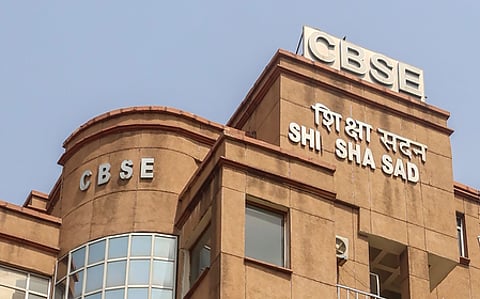

NEW DELHI: The Central Board of Secondary Education (CBSE) on Monday eased the transition to its three-language policy by allowing students currently in Classes VII, VIII and IX who are studying two foreign languages to continue with the same combination while including one Indian language.
The board said the current Class X batch will remain under the existing two-language system and will not be covered by the new policy.
The revised guidelines, to be implemented from the 2026-27 academic session in line with the National Education Policy (NEP) 2020, seek to address concerns schools and parents have raised over the transition to the new language framework.
Under the revised policy, students entering Class IX in 2026-27 will study three languages, with at least two being Indian languages (Bhartiya Bhashas) such as Hindi, Tamil, Bengali or Marathi. For the third language, they could choose another Indian language or a foreign language, such as English, French, or German, depending on a student’s existing language combination.
As a one-time relief, students already studying two foreign languages can continue with them while including one Indian language. For these transition batches, the third language will be assessed through internal school-based evaluation, and students will not have to appear for a Class X Board examination in the subject. The same exemption from a Board examination will apply to students currently in Classes VII and VIII upon entering secondary school.
The policy will be fully implemented for students currently in Class VI (2026-27) and subsequent batches. They will study three languages, including two Indian languages, and will eventually appear for a Board examination in the third language at the secondary stage. CBSE and NCERT are developing learning material in 22 scheduled Indian languages to support implementation.
The board has given exemptions for Children with Special Needs covered under the RPwD Act, CBSE schools abroad, and foreign students returning to India, while migrant families will get flexibility in language combos.
Maha govt makes Marathi must in school
The Maharashtra government has decided to make Marathi language compulsory from Class 1 to 10 in all education boards in state. If the schools are found violating the norms, then the actions like cancelling the permission and registration of the school would be taken.
