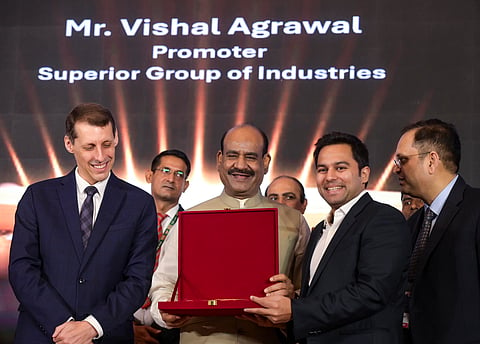

NEW DELHI: Lok Sabha Speaker Om Birla on Thursday underscored the importance of shared democratic values between India and the United States, describing them as a strong foundation for expanding bilateral trade, investment and technological cooperation.
Addressing the 23rd Indo-US Economic Summit 2026, Birla said that robust democratic institutions, stable policies, an independent judiciary and continuous engagement with stakeholders were essential to building investor confidence and creating opportunities for economic growth.
He described India and the US as two of the world's largest democracies, supported by strong and vibrant democratic institutions that contribute to stable and responsive policymaking.
"Democracy provides space for diverse voices and ensures that the views of industry, trade, agriculture, technology, students and other stakeholders are taken into account while framing policies and laws", Birla added further.
He identified individual liberty, freedom of expression, equality before the law and an independent judiciary as key pillars of India's democratic framework.
"A stable policy environment, predictable taxation policies and regular engagement between industry and policymakers, encourage investment and strengthen economic partnerships", he also remarked.
Birla appreciated the role played by the Indo-American Chamber of Commerce in strengthening economic engagement between the two countries since its establishment in 1968. He also commended its successive leadership for promoting dialogue, expanding trade relations, encouraging technology partnerships and generating employment opportunities.
" India's growing pool of skilled human resources offers considerable scope for further strengthening these partnerships", he said.
Highlighting the importance of industry-academia collaboration, Birla urged businesses to work closely with universities, IITs, IIITs, engineering colleges and other technical institutions to promote research and innovation.
He said also that industry investment in research had been a major driver of technological advancement across the world. " Stronger partnerships between businesses and educational institutions would enable India to develop new technologies, improve competitiveness and emerge as a leader in emerging sectors", he said.
Referring to the pharmaceutical industry, Birla noted that Indian medicines enjoy considerable international recognition, particularly in African countries. He called for pharmaceutical companies and universities to collaborate on research to address evolving healthcare requirements.
He also pointed to the opportunities offered by advances in artificial intelligence and medical technology, highlighting India's progress towards self-reliance in defence under the leadership of Prime Minister Narendra Modi, alongside its expanding capabilities in defence manufacturing and exports.
Describing India's young population as one of its greatest strengths, Birla said the ideas, skills and innovative potential of young Indians were making a significant contribution to national development.
He further noted that the country's expanding startup ecosystem had developed solutions to several global challenges. Micro, small and medium enterprises (MSMEs), he added, also presented significant opportunities for investment, technological collaboration and employment generation.
Birla encouraged businesses from both countries to establish partnerships that capitalise on their respective strengths and help expand their presence in international markets.
On energy cooperation, he observed that industrial expansion, the growth of data centres and increasing investment in technology were driving up energy requirements.
He stressed that industrial progress must be accompanied by environmental responsibility, while drawing attention to India's initiatives to promote clean and green energy. Greater cooperation among industry, scientists and researchers, he said, could accelerate the development of innovative energy technologies and support sustainable economic growth.
Birla also highlighted the growing interconnectedness of the global economy, noting that developments in one country increasingly have consequences for economies and societies worldwide.
Emphasising the need for peace, stability and mutual trust, he said India had consistently supported collective efforts to address global challenges.
"Guided by the philosophy of Vasudhaiva Kutumbakam, India believes that countries must work together in a spirit of mutual respect to advance economic progress and social well-being", he asserted .
Expressing optimism about the outcomes of the summit, Birla said its discussions would generate fresh ideas and open new avenues for cooperation in industry, trade, technology, research and innovation.
He reiterated that economic development must be inclusive, provide equal opportunities and contribute to social welfare.
"Shared prosperity and human well-being, must remain the guiding objectives of international cooperation", he said.
