
RAIPUR: For nearly a couple of years, a shadow economy thrived in the lanes of Chhattisgarh's Durg district, turning ordinary bank accounts into the lifeline of national cybercrime syndicates.
Lured by the promise of quick cash, misguided youths, contract labourers, and daily wage earners handed over their banking credentials to middlemen—unknowingly becoming foot soldiers in a clandestine racket that Durg Senior Superintendent of Police (SSP) Vijay Agrawal described as a sprawling "cottage industry.”
Today, that chain has been decisively broken.
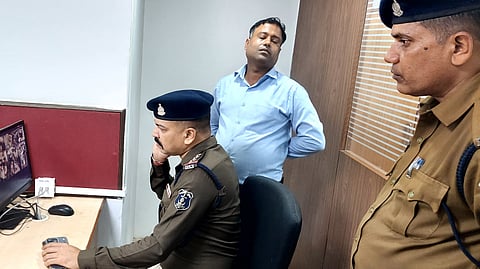
Through a relentless, intelligence-led crackdown over the past year, Durg Police have dismantled the local mule-account syndicate, sending more than 350 accused—including 37 key agents and two private bank employees—behind bars.
“Investigations revealed that fraudsters operated with fixed market rates: a standard savings account fetched Rs 15,000 to Rs 20,000, while a current or business account was bought for Rs 40,000 to Rs 50,000, paid either as a lump sum or a monthly retainer. Once acquired, syndicates immediately altered the Registered Mobile Number (RMN) linked to the account. Kept completely in the dark without transaction alerts, original account holders only realised the scale of the fraud—spanning cyber scams, illegal betting, and online gaming—when police traced Rs 15.35 crore in disputed transactions across 1,668 flagged accounts and knocked on their doors with arrest warrants”, SSP Agrawal told TNIE.
Detailing the precision behind the operation, SSP Agrawal explained that the crackdown began by mining data from the state police headquarters portal and the Indian Cyber Crime Coordination Centre.
"We collected details of accounts used in cyber frauds, coordinated directly with banks to obtain KYC records and statements, and swiftly registered FIRs," the SSP added. Out of 3,162 suspicious accounts placed under scrutiny, 1,668 have already been linked to 63 criminal cases, with chargesheets filed in 38.
The severity of the legal fallout has sent shockwaves through the district. With courts taking a stringent view of cyber-fraud conspiracies—where bail often remains elusive even at the High Court level, forcing accused individuals to seek relief from the Supreme Court—the allure of "easy money" has evaporated.
Public awareness and fear of strict prosecution have prompted residents to flatly refuse requests to rent or sell their bank accounts.
With Durg’s underground banking pipeline choked off and financial trails being shared with the Financial Intelligence Unit (FIU) for potential Enforcement Directorate and Income Tax action, cyber fraud originating from the district has plummeted—forcing desperate syndicates to flee and hunt for vulnerable account holders in other states.
