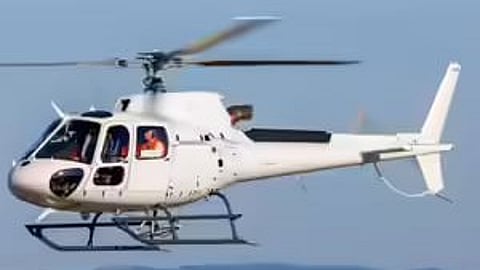

NEW DELHI: India has less than a fourth of the minimum number of helicopters it requires, resulting in a crippling shortage that is affecting emergency medical services, heli-tourism and corporate travel, government sources said.
The shortage has also prevented the deployment of helicopter ambulances, particularly in remote and hilly areas, where they could provide crucial life-saving assistance. Heli-tourism has struggled to take off on a large scale, while demand from corporates for quick travel options for executives to avoid road traffic remains largely unmet.
A government source told this reporter that India currently has more than 270 helicopters, including those operated by government agencies and private companies, of which nearly 240 are operational at any given time. The remaining aircraft are grounded due to maintenance requirements, replacement of parts or other operational issues.
“We require at least a minimum of 1,000 helicopters to meet the requirements of the population of a country our size,” the source said.
Highlighting the disparity between India and other countries, the source cited Sao Paulo in Brazil, which alone has more than 300 helicopters, of which around 18% are deployed as ambulances.
The shortage of helicopters is compounded by a severe lack of trained pilots and the absence of private helicopter training institutes in India, aviation consultant and former helicopter pilot Captain Tejwant Singh Rait said.
“Nearly 90 per cent of the present pilots are former personnel who have served in the Army, Navy, Air Force or Coast Guard. There is a huge dearth of helicopter pilots and many private operators who ventured into this business have shut shop because of this shortage,” he said.
Aspiring helicopter pilots are required to travel abroad for training, Captain Rait said, adding that they must first clear examinations conducted by the Directorate General of Civil Aviation (DGCA) to become eligible for training.
He said major operators such as Pawan Hans, Global Vectra and Heligo Charters were among the few players able to sustain operations in the sector.
Another aviation professional said training institutes that had started operations in the past were forced to shut down as they lacked helicopter trainers.
Federation of India Pilots (FIP) president Captain C S Randhawa said India’s helicopter industry had immense potential. In a recent letter to the Prime Minister seeking a national helicopter safety framework in the wake of several helicopter accidents, he highlighted the critical role of helicopters in remote regions and strategic sectors.
“In the Himalayan States, helicopters are the only practical means of accessing remote locations and providing urgent assistance. Similarly, offshore operations are necessary to India’s energy infrastructure. What is required is to ensure these operations are conducted with the highest standards of safety, professionalism and operational discipline,” he said.
