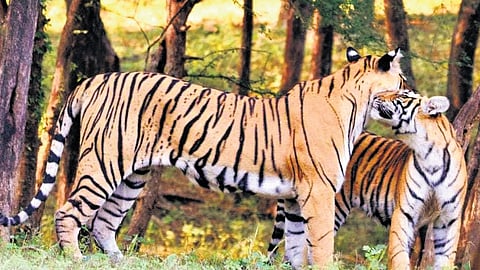

NEW DELHI: Conservationists at the Buxa Tiger Reserve (BTR) are brimming with hope, as a tigress relocated from Bihar in October may soon mate with a male partner from Bhutan and restore a viable tiger population in the park.
The male tiger, hailing from Bhutan’s Phibsoo Wildlife Sanctuary, has established a pattern of visiting the adjoining BTR each winter. His presence was even documented during the fifth tiger census in 2022, raising hopes that he will return once more.
“If he comes this year, he may not return and will make BTR his new home,” he said.
Winter is also mating season for the big cat. The big cat’s winter visit to BTR is also due to the need to avoid extreme winter in the hilly terrain of Bhutan and to access good water bodies. This tigress, now affectionately known as Dooars Rani (Queen of the Dooars region of West Bengal), has endured a challenging journey.
Originally from Bihar’s Valmiki Tiger Reserve, where she was identified as T-138, she was eventually relocated to West Bengal’s BTR to help revitalise its tiger population.
However, the transition was marred by hardship; she suffered multiple injuries during her capture and transportation, resulting in a heartbreaking miscarriage.
“Now with her foetus aborted, she needs a male partner to conceive,” he said.
To add to her trials, she managed to escape from her open enclosure in Buxa not once, but twice, making her way briefly into Assam.
“Like other big cats, she was also in exploratory mode to find the right place to litter; unfortunately, it was miscarried while bringing her back from Assam,” he said.
Mating in full swing
The male tiger, hailing from Bhutan’s Phibsoo Wildlife Sanctuary, has established a pattern of visiting the adjoining BTR each winter. His presence was even documented during the fifth tiger census in 2022, raising hopes that he will return once more. Winter is also mating season for the big cat. The big cat’s winter visit to BTR is also due to the need to avoid extreme winter.
