
CHANDIGARH: Amid the ongoing geopolitical tensions between United States and Iran, traditional shipping routes have been severely bottlenecked thus the Middle Eastern countries are now building up their strategic food buffer stocks to counteract major maritime supply chain disruptions due to the closure of Strait of Hormuz.
Middle- East countries rely on imports for 80 per cent to 90 percent of their food and had been actively managing the crisis through localized storage infrastructure and alternative transit.
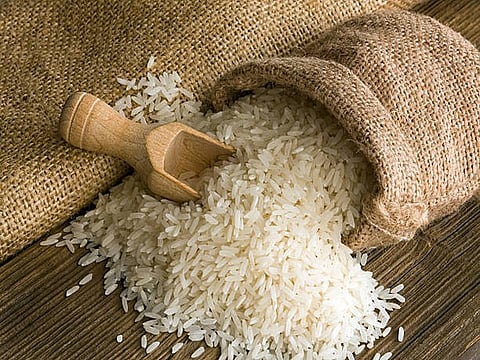
They are now shifting from just-in-time supply chains to multi-month emergency reserves. Thus the farmers in Punjab are raping the benefit from this. The reason the exporters are buying basmati from the farmers at Rs 4,000 per quintal now as against Rs 2,500 per quintal last year and selling at $1,000 per tonne as earlier it was being sold around $9,00 per tonne.
Iran is the second-highest importer of Indian basmati after Saudi Arabia, with the sela (parboiled) variety particularly cherished there as it imports around 12 lakh tonnes annually, valued at about Rs 12,000 crore before the West Asia conflict began. The 1509 and 1718 varieties known for their long grain and aroma, produced in Punjab and Haryana, are particularly popular in the Iranian market.
According to basamti exports, the changing situation is not merely a consequence of geopolitical tensions. It also reflects a fundamental change in the procurement strategies of Middle Eastern countries, which are increasingly focusing on securing adequate food supplies, maintaining strategic reserves and reducing their vulnerability to possible disruptions in international supply chains.
For decades, several Gulf Cooperation Council (GCC) countries have relied heavily on imports to meet their food requirements. Rice, pulses, sugar and other essential food commodities are largely sourced from international markets, with India and Pakistan serving as important suppliers due to their geographical proximity, established trade relationships and substantial agricultural production.
In the 2023–24 fiscal year, a total of 59.42 lakh metric tonnes (LMT) of basmati rice was exported from the country. Of these exports, basmati rice was mainly sent to five countries: 7 LMT to Iran, 11 LMT to Saudi Arabia, 8 LMT to Iraq, 3 LMT to Yemen, and 3 LMT to the US.
Punjab is the highest producer of basmati rice in the country, accounting for 40 per cent of production, followed by Haryana and other states.
Talking to TNIE, Ranjit Singh Jossan Vice President of the All India Rice Exporters Association (AIREA) said, "the ongoing geopolitical tensions between the United States and Iran have significantly affected the international rice industry and several other sectors over the past eight months. Rising ocean freight rates, higher marine insurance premiums, uncertainty over shipping routes and disruptions in international logistics have created considerable challenges for exporters and importers."
Further he added, "However, the latest developments indicate that the global rice trade is undergoing a significant shift, with food security emerging as a major priority across the Middle East, large buyers exploring alternatives to container shipping, and Indian basmati farmers benefiting from stronger market prices."
"Under normal circumstances, many importers could procure food commodities according to their immediate requirements because international supplies remained reasonably accessible. However, the recent geopolitical uncertainty has highlighted the risks of depending heavily on uninterrupted shipping routes and overseas supplies." he said.
"This situation has prompted governments and major food importers to give greater attention to strategic food reserves, long-term procurement arrangements, alternative supply routes and domestic food production wherever feasible," he said.
Jossan noted that India has long maintained public foodgrain procurement and buffer-stock mechanisms as part of its food security framework.
"For many Middle Eastern countries, however, import dependence makes the availability of adequate reserves and reliable international suppliers particularly important during periods of uncertainty." he said.
"Qatar and other Gulf countries have increasingly recognized the importance of long-term food security planning, including the development of storage infrastructure, diversification of import sources and exploration of local agricultural possibilities." he said and added that this changing approach could have a direct bearing on Indian basmati exports.
As buyers seek to secure supplies in advance rather than purchase only according to immediate consumption requirements, procurement volumes can increase, potentially supporting export demand and domestic market prices.
"Another important development is the renewed interest in bulk and break-bulk shipping as alternatives to conventional containerised transportation. Over the years, container shipping became the preferred mode for a substantial portion of the international rice trade because it offers convenience, organised handling, protection during transportation and flexibility in shipment sizes." said Satish.
"However, periods of geopolitical instability and shipping disruptions have exposed exporters and importers to sharp freight increases, equipment shortages and uncertainty over vessel availability," said Satish Goel, President of AIREA.
He added that as a result, some large buyers and sellers are exploring alternative shipping arrangements, particularly for consignments involving thousands of tonnes of rice or other food commodities.
"We export around one million tonnes of basmati to Iran which is approximately 15 to 16 per cent of total global export from India," said Goel.
Industry insiders’ estimate suggest that, on certain Middle Eastern routes, bulk shipping arrangements may involve freight costs of approximately US$50–100 per tonne. Containerised shipments, depending on the route, shipment size and prevailing market conditions, may be substantially more expensive.
"Four break-bulk vessels reportedly moved to Saudi Arabia over the past two months, while four such vessels were reported to have reached Yemen during the preceding three months. Three additional vessels for Iraq were stated to be in the pipeline. These figures require independent verification, but they illustrate the growing attention being given to alternative shipping arrangements for large consignments of food commodities." said Jossan.
"Trade involving Iran presents additional complexities because of geopolitical risks, insurance restrictions, banking arrangements, port access and applicable sanctions and compliance requirements," said Jossan.
He said that the Pusa-1509 variety (Basmati), which was trading at approximately Rs 2,500 per quintal during the previous season, has reportedly crossed Rs 4,000 per quintal in some markets this season. Actual prices vary according to mandi, grain quality, moisture content, broken-grain percentage and prevailing local demand.
If these indicative figures are compared, the increase amounts to at least Rs 1,500 per quintal, representing a substantial improvement in the gross price received by farmers.
