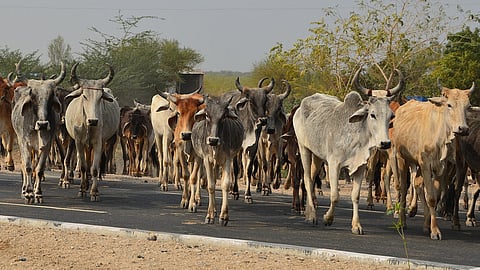

NEW DELHI: The Ministry of Agriculture and Farmers Welfare has officially recognised 16 breeds of livestock and dogs across 13 states and one UT.
This recognition includes breeds of cattle, buffalo, goat, sheep, donkey, horse, pig, yak, and dog. The formal notification from the Department of Agricultural Research and Education will facilitate conservation efforts for these breeds in terms of production, breeding, utilisation, consumption, and trade, thereby strengthening the rural economy.
The newly recognised cattle breeds include Koppal from Karnataka, Periyar from Kerala, the Gomanchali buffalo from Goa, and the Kombai dog, which is native to Tamil Nadu. Other cattle breeds recognised are Mahakaushali from Madhya Pradesh and Umarda from Maharashtra.
Additionally, the list includes Battisi and Totapuri goats from Rajasthan and UP, respectively; Asomi, Kow Debar, Madgyal, and Seemanchali sheep from Assam, Uttarakhand, Maharashtra, and Bihar; the Braj donkey from UP; the Kashmiri horse from J&K; and the Nagal pig from Nagaland; the Sikkimese yak; and the Kombai dog.
The recognition of these 16 newly registered animal breeds includes cattle, goats, pigs, yaks, and dogs. On August 7 of this year, the Indian Council of Agricultural Research (ICAR) announced that these indigenous animal breeds were recognised following recommendations from the Breed Registration Committee during its 14th meeting. The national registration process is conducted by the ICAR–National Bureau of Animal Genetic Resources (NBAGR) located in Karnal, Haryana.
The ICAR–NBAGR is mandated to identify, characterise, conserve, and sustainably utilise India’s animal genetic resources. Unique accession numbers have been assigned to each breed to aid in their identification and conservation.
The notification, issued on October 16 and published today, is significant for Indian agriculture because indigenous breeds often have characteristics adapted to specific climatic conditions.
Documentation
The recognition may enhance breed documentation and lay the groundwork for future conservation programmes
However, it is important to note that registration alone does not guarantee financial assistance or increased productivity
