
In a major connectivity boost to Himachal Pradesh, two tunnels between Deod and Hanogi on the Kiratpur-Manali four-lane national highway are set to open on Friday, following safety checks and a trial run by the National Highways Authority of India (NHAI).
The two twin-tube tunnels measure 2.8 km and 650 metres and are connected by a 140-metre bridge near Khotinalla. Initially, one tube of each tunnel will be opened, bypassing a 5.5-km landslide-prone stretch of the old road and reducing travel time between Mandi and Kullu by about 60 minutes.
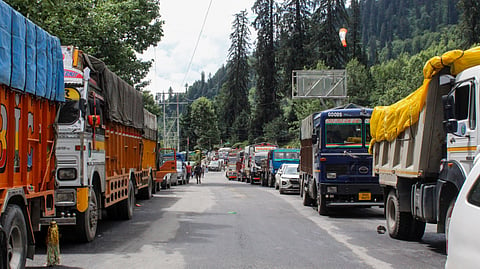
The tunnels are expected to ease congestion on the Pandoh-Takoli section of National Highway-03, a key route linking Mandi with Kullu-Manali and further towards Leh-Ladakh.
The new infrastructure will also provide an alternative to stretches that frequently face traffic congestion, particularly during the peak tourist season.
The Union Minister for Road Transport and Highways Nitin Gadkari announced the opening on his official X handle, describing it as a significant step towards safer, faster and more reliable connectivity in Himachal Pradesh.
Gadkari said, “A major boost to connectivity in Himachal Pradesh! 2 major tunnels at Deod and Hanogi are being opened to traffic on 11 September 2026, marking a significant transformation in connectivity on the Pandoh–Takoli section of NH-03."
"...The tunnels will reduce the affected road stretch from 6 km to 3.5 km and provide relief from prolonged congestion at Jogni Mata Mandir, Deod and Hanogi, where tourist-season traffic can face delays of 1–2 hours or more," the union minister said.
The tunnels are part of the Rs 4,465.94-crore four-laning project covering the End of Pandoh Bypass-Takoli section of NH-21. The 18.908-km corridor is being executed under the Hybrid Annuity Mode (HAM).
Gadkari said improved traffic flow along the corridor is expected to bring the journey between Mandi and Kullu down from around two hours to approximately 60 minutes under normal traffic conditions.
Sources said earlier delays in the project were caused by mountain movement across two fault zones, which were studied by an Austrian company to address cracking. The tunnels have been equipped with CCTV, ventilation systems and emergency exits.
“There is a need to slow down traffic at the entrance of the tunnel with safety arrangements like blinkers. The project is strategically important,” an official said.
A few days ago, former Himachal Pradesh chief minister and the Leader of Opposition Jai Ram Thakur had said that once the tunnels became operational, the most landslide-prone stretch would be bypassed, making travel safer and significantly reducing the distance.
