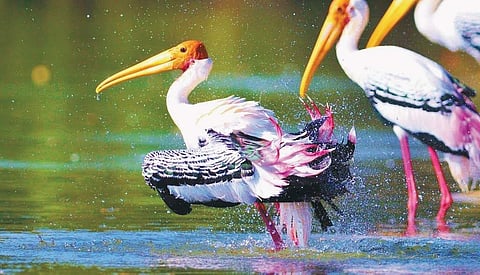

HUBBALLI: The third edition of Karnataka Hakki Habba (Bird Festival) is all set to be held in Hampi.
The three-day festival will be held in the birding locations around Hampi and Daroji Sloth Bear Sanctuary in Ballari district in the first week of January.
The last two editions of the Habba were successfully conducted by the Forest Department and Eco Tourism Board at Ranganathittu and Kali Tiger Reserves. The third edition was planned to be held in Magadi Tank near Gadag, but the location was changed as the lake has less water and winged visitors due to poor rainfall.

“Magadi lake attracts thousands of bar-headed geese every winter. But due to lack of rainfall in the region, there is no water. Some of the migratory birds have shifted to other lakes nearby. Hence, we had to change the location of bird festival. Besides Magadi tank, areas around Hampi and Tungabhadra and Almatti dam backwaters too were in consideration as alternative locations for the festival. But, we later finalised Hampi,” said B J Hosmat, Principal Chief Conservator of Forests (wildlife).
“Discussions are still on about the events to be held during the festival. The interpretation centre of Daroji park at Kamalapur will be the main centre. Bird walks and birding sessions will be organised along the river in Hampi with ornithologists,” Hosmat said.
During the second edition of the bird festival, senior ornithologist from Delhi Bikram Grewal was the centre of attraction for young birding enthusiasts.
Hampi, besides having the historical ruins of 14th century, also shelters large number of bird species. The Tungabhadra river that flows through Hampi is the main source for birds and winter visitors. The yellow-throated bulbul and painted sandgrouse are some of the rare birds that can be found in Hampi and Daroji.
Samad Kotur, an environmentalist from Ballari and author of the book ‘Birds of Hampi’, expressed happiness over the government’s decision to organise the festival in Hampi. “Hampi, which has rich bird population, is less explored compared to other birding areas in Karnataka. The festival will boost interest about birds among people and participants,” he said.
“The festival is in reorganisation of bio-diveristy of north Karnataka and it’s a good move to explore wildlife areas other than Mysuru and Bengaluru surroundings. There are number of bird photographers and conservationists working in northern parts of Karnataka and the festival will give them an opportunity to showcase the bio-diversity of their region to rest of the state,” he added.