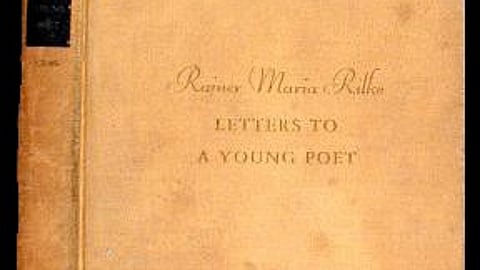

Rainer Maria Rilke's ‘Letters to a Young Poet’, a compiled collection of ten letters written by the Austrian veteran poet to Franz Xaver Kappus, is considered a handbook for all amateur poets. Among the different themes explored in relation to poetry, Rilke talks about ‘God’ as a process, rather than a finite and closed entity. He writes, “If he were already there, what would we have to do? But if he is still to be, if he is still becoming, then our lives are the contribution to his being. All our experiences, even the most difficult ones, are part of this process of ripening.”
Rilke's ‘Book of Hours’ is a collection of love poems to the infinite. Two of the poems stand out, asking questions which place the divine powers as a work-in-progress, dependent on the human in the making and the unmaking of the world.
‘What will you do, God, when I die?’
The poet quotes the familiar metaphors used to describe the creation to underline that his imagination can never picture the existence of the unseen without the visible beings –
‘ I am your pitcher, I am your drink,
I, your garment, I, your craft,
Without me what reason have you? ‘
Rilke implies that the existence of the eternal depends upon that of the transient one. He transcends the hierarchical pattern in God/man, and asks,
‘What will you do, God? It troubles me.’

Rilke imagines God as his lover who will miss his presence and search for him
‘ hour after hour,
and lie at sunset, spent,
on an empty beach
among unfamiliar stones.’
In yet another poem he imagines God as his neighbour.
‘I know you're all alone in that room.
If you should be thirsty, there's no one
to get you a glass of water. ’
The poet waits, listening for a signal from inside, so that he can dash into the room and be of any help. He acknowledges that the wall between them is very thin and a cry from either of them would break it down.
‘It would crumble easily,
it would barely make a sound.’
Reading Rilke is also a way to read the divine act into the web of human actions. The ripening of the universe is not a finished act. It is a work-in-progress, where help must pour in from all sides. Rilke's verses nudge the indolent into making the world a better place for all. Rush into the room with a pitcher of peace; the walls have already crumbled down.
The writer is a poet, translator and assistant professor of English at BCM College, Kottayam