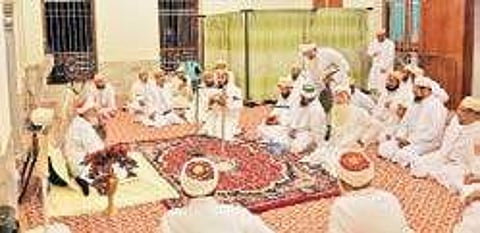

KOCHI: It’s Ramzan season. A community in Kochi wakes up before dawn for their fihori - the morning breakfast, and goes to their mosque in Thoppumpadi for morning prayers which commence at 5.30 am. The season is a time of spiritual edification and communal unity among the Dawoodi Bohras.
Around 130 odd people from 40 families gather at the mosque for ritual prayers. The people spend their time in the mosque participating in Quran recitals and prayers. The sermons in the mosque and the conversations in the households are mostly in Gujarati, as it is their mother tongue.
The Bohras are a vibrant community of Muslims with their roots in Gujarat. They have been here for only less than a century. Their ancestors migrated during a time of severe drought to various parts of the globe and some found their way to Kochi.

The Bohras are unique in their dressing and food customs. The people of the community follow a uniform attire collectively called libas-ul-anwar. The men wear an ensemble consisting of a kurta and saya - a long outer robe, and the women adorn the rida - a trademark Bohra garment which is not found elsewhere. The community breaks their fast in a very distinct manner. They don’t go for an extravagant ifthar meal; they break the fast with dates, biscuits, tea and sometimes a glass of honey and water if the climate is hot.
This small meal is consumed inside the mosque itself and they later move on to the community hall, near the mosque to have their dinner meal at around 8 pm. “The dinner menu is always fixed beforehand at the community headquarters at Mumbai,” says Kochi community secretary Sheikh Sadiq Kapasi. “All Bohras in the country follow this. We eat from one large plate called the Thaal. These practices are unique to us and it shows the unity and love within the community.”
The dinner meal often begins with dessert (ice cream, sweets, fruits) and then moves on to a savoury dish and then finally to a rice dish. After dinner, the families come together at the mosque for a midnight prayer to close the day.
“There are around 10 lakh Bohras worldwide. Unlike other Muslims, we start and end our Ramzan season on the same day worldwide. We do not wait for the moon to show up, rather we have a calendar for our community, based on the movement of the moon,” says Sadiq.
Only seen among Bohras
Every member of the community throughout the world has a smart ID card. The ID card is used to organise the community by keeping a tab on the members of the community. “Usually during Muharram, we gather together at a place (as decided at the headquarters) for a big fellowship,” says Sadiq. “Everyone in the community is taken care of and given free food. The ID cards are of much help during such times to identify those in the community.”
In the community, people buy fish directly from the market to get live fish. They do not buy dead fish. “We touch the fish and utter a few words of prayer before killing it. The people at the market are aware of our tradition. We generally buy Karimeen because it doesn’t die fast out of water,” says Sadiq.