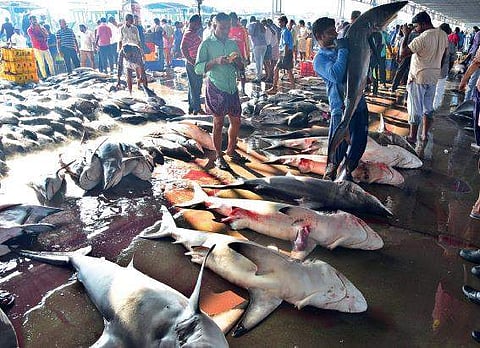

KOCHI: As the rising sun paints the sky in orange, another day of hustle and bustle begins at Thoppumpady fishing harbour. The fishermen haul in the day’s catch from the vessels, buyers jostle to get a close look of the bounty of the sea and auctioneers yell on top of their voice.After the business shifted from Mattanchery, which was the hub of spices and coir trade in Kochi, and the International Container Transshipment Terminal (ICTT) started operations, Thoppumpady harbour has been the primary source of livelihood for the denizens in West Kochi.
Around 600 long line fishing vessels operate from the harbour, which provides direct employment to around 10,000 workers and indirectly sustains the lives of around 1 lakh people employed in the allied sector, including the seafood industry. Though the workers here have been clamouring to retain the domestic terminal at the Kochi Port, their demands have not been met. The assurance to provide jobs at the ICTT has also not been met. Though Thoppumpady harbour is one of the biggest fishing harbours in India, it doesn’t have the space to operate all the fishing vessels in Kochi. While the traditional fishing boats have shifted operations to harbours at Kalamukku, Chellanam and Kamalakkadavu, around 500 trawler boats are operating from Munambam, Kalamukku and Murikkumpadam harbours, said Matsya Thozhilali Aikya Vedi president Charles George, who is also the convener of the district coordination committee of fishermen.

“The government should intervene and hold talks with the stake holders regarding steps to develop the harbour. Workers from Thoothoor, Vallavila, Chinnathurai and other fishing villages in Kanyakumari district of Tamil Nadu are working in these boats. After the Ockhi disaster, many boats operated by these Tamil Nadu people have shifted operations from here. New fishing harbours have come up in Colachel, Thengapattinam and Muttom in Kanyakumari and the business is slowly shifting from Kochi. These long liners operate paying the annual user fee of `25,000. However, the fishing boats get better prices in Kochi due to the presence of the seafood industry and export companies operating here,” he said.
The long line fishing vessels stay at sea for 15 to 20 days and their catch include yellow fin tuna, sailfish, sword fish, marlin, mahi-mahi, stingray and shark among others. Refuting allegations of finning in Kerala, Cochin Long Line Boat and Gillnet Buying Agents Association general secretary M Majeed said exclusive shark fishing as a practice does not exist in Kerala. Often, sharks are caught as by-catch from trawl, gill net, hook and line and long line operations. However, there is a high demand for shark meat, dried salted meat, small fresh sharks, shark liver oil, cartilage, skin, gut and entrails.
“There is no ban on shark catch and there is a high demand for its meat in Kerala. The fin of the shark is not used in Kerala and it is going waste after the Union Government imposed a ban on its export in 2015. We have submitted a petition to the Union Commerce Minister Suresh Prabhu urging to revoke the ban. He has assured to consider our demand,” he said.
Fresh shark meat is sold at `160 to `230 in the local market and dried meat costs around `500 per kg. The Central Marine Fisheries Research Institute in its guidance on national plan of action for sharks in India had recommended re-consideration of the ban on export of shark fin by the Ministry of Commerce, said Majeed. “The CMFRI had in its report said that since the fishermen in India do not practice on board shark finning, complete prohibition of trade in shark fins may be re-evaluated and restricted to prohibition of trade protected and listed species,” he said.