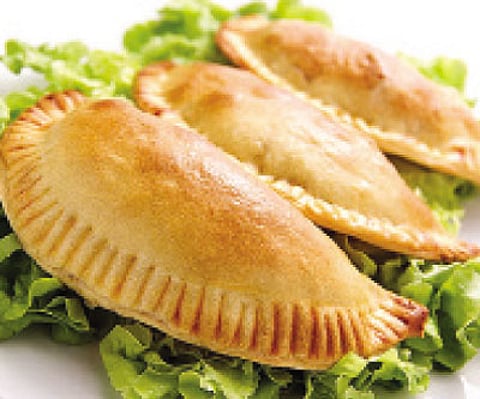

I have always maintained that food is the one thing that is universally loved, adapted and passionately spoken about. On a recent trip to Brazil, I was excited to see small stuffed pastries beautifully displayed in eateries and beach side kiosks. They reminded me of our mouth-watering hot samosas that I have always enjoyed with tamarind chutney. Here in Brazil they are referred to as empanadas ! Don’t get confused, these are different words for almost the same dish. A brilliant example of how food has been adapted all over the world depending upon the availability of local ingredients.
An empanada is a stuffed bread or pastry, available in different countries of Latin America, Southern Europe and parts of South East Asia. It is either baked or fried. The name comes from the verb empanar, meaning to wrap or coat in bread. Empanada is made by folding a dough or bread patty around the stuffing. The stuffing can consist of a variety of meats, cheese, huitlacoche, vegetables or fruits among others. The Empanada traces its origin to Spain and Portugal.
Empanada Variants:
1.Brazilians have their own version of the empanada called empadas or empadinhas (little empadas). Empadinhas are more likely to have a round shape, like mini pies, and exotic fillings such as shrimp or salted codfish.
2. Argentinan empanadas are often served at parties as a starter or main course, or in festivals. Shops specialise in freshly made empanadas, with many flavours and fillings.
3. The Buenos Aires empanadas are similar to the ones found in the Tucumán Province in Argentina, but with a greater variety
of fillings.
4. Bolivian moon shaped empanadas (Saltenas) are made with beef or chicken, accompanied with potatoes, peas, carrots, hard-boiled eggs, olives and raisins.
5. Chilean empanadas like Colombian and Dominican Republic are baked or fried and can have a wide range of fillings (beef, onions, raisins, seafood, etc.)
6. Ecuadorian empanadas are made of corn seasoning or flour. Their components may include peas, potatoes, steamed meat known as carne guisada and vegetables.
7. In Ghana, traditional-style empanadas called “meat pies” are made with a pastry shell and corned beef filling.
8. In Haiti, empanada is a meat-filled pastry with a thicker crust called pate.
9. In Indonesia it is known as panada. It has a thick crust made of fried bread, giving it bread texture and is filled with spicy tuna and chilly peppers.
10. A Jamaican “pattie” is a pastry that contains various fillings and spices baked inside a flaky shell, often tinted golden yellow with an egg yolk mixture or turmeric.
11. In Malaysia, curry puff or karipap is considered the Malaysian version of empanadas.
12. The Maldivian empanada, locally known as patty is a pastry that contains spicy tuna fillings accompanied by chopped onions, chopped garlic, potato and of course, the Maldivian chilli.
13. Mexican empanadas can be a dessert or breakfast item and tend to contain a variety of sweetened fillings; these include pumpkin, yams, sweet potato, cream and fruit fillings besides meat, cheese, and vegetables.
14. In Nigeria, these pastries are commonly referred to as “meat pies”. They are usually stuffed with carrots and greens with the meat being either beef or chicken.
15. Peruvian and Paraguayan empanada are usually baked. Common variety contains ground beef, seasoned with cumin, hard-boiled egg, onions, olives, and raisins. The dough is usually sprinkled with icing sugar.
16. In Philippines, Filipino empanadas usually contain ground beef or chicken meat, potato, onion, and raisins in a sweetish wheat flour dough.
17. In Portugal the most common fillings are chicken, beef, tuna, codfish and, more recently, mushrooms and vegetables.
18. Referred as empanadilla in Puerto Rico, it is made of flour or cassava flour dough, lard and sometimes vinegar. The empanada is filled with meat (chicken, picadillo, chorizo, turkey, etc), spinach, pigeon peas with coconut, cheese, marinara sauce and mozzarella (known as an empanadilla de pizza or an empanadilla de lasagna), or cheese
with fruit.
19. In Spain, empanadas are fried or baked, often made from a rather thin, pliant, but resilient wheat.
20. In United States, empanadas have a half circle flaky crust, filled with seasoned pork, beef, chicken, and cheese is used.
How to make empanadas
Ingredients for 10 empanadas
● 5 tablespoons butter
● 3 tablespoons vegetable shortening
● 2 1/2 cups flour
● 1 teaspoon salt
● 3 egg yolks
● 1/4 cup buttermilk
For the Filling:
● 2 tablespoons butter
● 1 tablespoon olive oil
● 4 pieces bacon, chopped fine (optional)
● 1 large onion, chopped fine
● 1 tablespoon sugar
● 1 can hearts of palm, drained and chopped
● 1 tablespoon flour
● 1 cup whole milk
● 12 black olives, roughly chopped
● 1/2 cup small cubes of farmer’s cheese or feta
(optional)
Preparation:
1. Melt the butter with the shortening, and let it cool.
2. In a large bowl, stir together the flour and salt. Stir in the cooled butter and shortening with a fork.
3. Stir in the egg yolks, and mix well. Add the buttermilk gradually until mixture starts to come together. Knead briefly until dough is smooth.
4. Wrap dough in saran wrap and let it rest on the counter for 30 minutes to an hour.
5. Melt butter and oil in a skillet on medium heat. Sauté optional bacon pieces until crispy then remove to paper towels. Add the onions and sugar to the skillet and sauté until golden and translucent.
6. Add the hearts of palm and sauté a few minutes more.
7. Stir in the flour, then add the milk and lower heat slightly. Cook, stirring, until mixture thickens.
8. Remove from heat and stir in the olives. Stir in the farmer’s cheese and bacon bits, if using. Set aside to cool.
9. Preheat the oven to 350º. Divide dough into 12 pieces. Roll out 10 of the pieces into circles large enough to line the bottom and sides of a standard muffin tin. It may help to roll the dough, then let it rest for a few minutes, then roll out the rest of the way. The rest lets the elasticity in the dough relax, and helps it to maintain its shape.
10. Line 10 muffin tins with dough circles, pressing them into the bottom and sides of the pan.
11. Divide the filling between the 10 lined muffin tins.
12. Roll out the remaining two portions of dough and cut circles to match the diameter of the muffin tins. Place the circles on top of the filling, and pinch around the edges to seal them with the dough lining the tin. Seal them well so that the filling doesn’t leak out during baking.
13. Bake pastries for 25-30 minutes, or until golden brown.
The writer is a well-known restaurateur and author of many cookbooks. Follow him at www.monishgujral.com