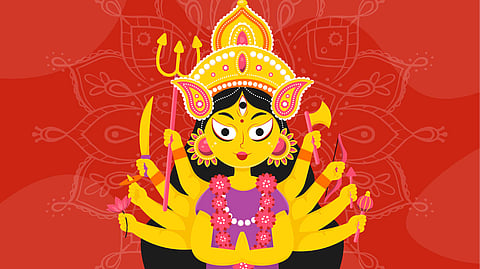

It is that time of the year when divine feminine power takes centre stage in our country. For ten days, Durga is celebrated as the ultimate embodiment of female strength. Elaborate pandals showcase her many manifestations and songs extol her glory. The fierce feminine is worshipped and then we return to the more familiar business of taming the very spirit we spent days celebrating. But the world has women who have fought battles far more brutal. In this festive season, here are a few stories of women artists who have turned their pain into powerful expressions of defiance.
Sonabai Rajawar grew up in a joint family where company was never in short supply. Married at fifteen, she soon found herself in a world that stifled her. Her husband forbade her from stepping out or interacting with anyone other than her young son. For fifteen long years, she lived in total confinement, with nothing but silence to fill her days.
But the silence could not contain her spirit. With whatever materials she could lay her hands on, Sonabai began her artistic journey. Using clay from her yard, she made toys for her son. Gradually, she began embellishing the walls of her home with clay figures. With no formal training, she transformed the walls that had imprisoned her. Animals, humans, and deities emerged from the clay, giving purpose to her days and imaginary companions to her solitude. Recognition finally came in the 1980s, when renowned artist J Swaminathan stumbled upon her hidden world. Bharat Bhavan soon hosted a solo exhibition of her work. She later received the National Award and her unique technique came to be known as the Surguji style.
Hailing from Bihar, Ganga Devi endured the heartbreak of being abandoned by her husband for failing to bear a child. Yet, she carved out a place for herself through art. A practitioner of the Madhubani painting tradition, she went on to take her work beyond the confines of Mithila, gaining international recognition. In 1984, she was honoured with the Padma Shri. Her life ended tragically after a battle with cancer, but her artistic legacy lives on.
