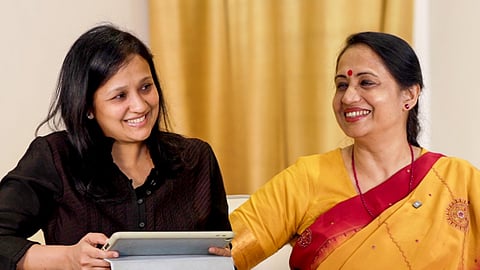

In Vidhana Soudha, every bureaucratic paper in Karnataka eventually lands on a single desk. Today, that mahogany expanse belongs to Dr Shalini Rajneesh. Yet behind the formidable title of Chief Secretary lies an administrator whose home life operates under a strict constitutional command—enforced not by the state cabinet, but by her daughter: zero official files at the dinner table.
As revealed in the latest episode of "Expressions", administrative pillow talk is strictly banished to morning and evening strolls. It is a necessary diplomatic truce. Dr Rajneesh and her husband, Rajneesh Goel, recently etched their names into state history as only the second IAS couple in Karnataka to succeed one another as Chief Secretary—a power dynamic that previously inspired Kannada literature and even a feature film, "Shalini IAS".
Rooted in a legacy of public service—her father, a Partition refugee who studied under streetlights before joining the IAS—Dr Rajneesh approaches governance with hands-on pragmatism. Whether field-inspecting the notorious, rain-drenched Silk Board junction or restructuring airport cab pickup zones after hearing taxi drivers’ complaints, her philosophy is unapologetically boots-on-the-ground.
A gold medalist in psychology, Dr Rajneesh also champions mental health resilience. Through initiatives like the state's anonymous "Tele Manas" helpline, her administration has fielded nearly 100,000 calls to support anxious youth navigating modern pressures. Her crusade extends to organ donation—a movement she ignited by pledging her own organs as Belgaum’s Deputy Commissioner and later donating her father’s body, blunting age-old superstitions with characteristic calm.
She pledged her organs in 2005, as Deputy Commissioner of Belgaum, after medical professors complained they had no bodies to teach with. Ten years later her father died and gave everything. Relatives then began murmuring about curses, so the family commissioned an effigy and a pandit to perform the rites anyway — "for the satisfaction of others."
Her finding, after years of the Jeev Sarthakte volunteer programme: "It's the educated ones who do not allow this because they're worried about what people will say." The very poor, she says, volunteer fastest. "Our pain will become somebody's gain. It is OK with us."
As she approaches 60 next June, Karnataka’s top bureaucrat remains remarkably unflustered by the mythical omnipotence citizens project onto her desk. "It’s not my mind that decides," she notes with wry candor, "it’s the rulebook."
Watch the full conversation on Expressions
