
By Kavirayani R Prasad
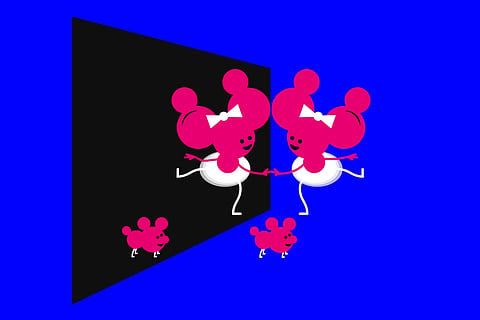
Chirality is a major phenomenon in nature, and molecular asymmetry is of pivotal importance in biological, chemical, medicinal and pharmaceutical sciences. An object is considered chiral if it cannot be superimposed on its mirror image, much like the human right and left hands. Such mirror-image molecules are called enantiomers. They have identical chemical formula and physical properties, but differ in the direction in which they rotate plane-polarised light and their interaction with other chiral molecules.
Life on Earth is based on chirality, or handedness. The essential molecules of life, amino acids and sugars, exist in one of the two mirror-image forms, a phenomenon known as biological homochirality. Amino acids, the structural elements of genetically encoded proteins, occur predominantly in the L-form in nature, while sugars, the building blocks of DNA and RNA, occur in the D-form. This uniform handedness is essential for the structure and function of biological systems.
Producing a single enantiomer through an abiotic process is challenging because, in the absence of a symmetry-breaking influence, chemical reactions generally produce nearly equal amounts of both enantiomers. Asymmetric synthesis using external chiral catalysts is well established, with major advances recognised with the Nobel Prize in Chemistry in 2001 and 2021. However, the origin of biological homochirality remained a mystery.
Several theories have been proposed to explain this phenomenon. One suggests that circularly polarised light (CPL) from neutron stars could preferentially destroy one enantiomer of amino acids, leaving an excess of the other that was subsequently delivered to early Earth. Another theory points to chiral inorganic quartz crystals as a possible means of favouring the formation of single-handed compounds. However, these proposals do not fully explain how the highly selective homochirality observed in nature could emerge from an extremely small initial imbalance between right- and left-handed molecules, particularly when chemical reactions initially produce nearly 50:50 mixtures of enantiomers.
An important question, therefore, is how a reaction can amplify a minute imbalance in enantiomeric composition to produce a predominantly single-handed compound. The 2026 Nobel Prize in Chemistry was awarded to Henri B Kagan and Kenso Soai for their discoveries concerning non-linear effects and autocatalysis in asymmetric organic synthesis, which have provided deeper insight into this fundamental question.
Before Kagan’s pioneering work in the 1980s, product purity was expected to correlate linearly with catalyst purity. Kagan demonstrated that a catalyst with low enantiopurity could still yield a product with much higher enantiomeric purity, a non-linear effect known as asymmetric amplification, which he attributed to differences in the reactivity of homochiral and heterochiral species.
Asymmetric autocatalysis occurs when a chiral product acts as a catalyst for its own formation. For instance, when a left-handed enantiomer is formed, it can promote the production of more of the same enantiomer, amplifying the initial imbalance between the two mirror-image forms.
In a groundbreaking study published in 1995, Soai demonstrated that a small imbalance in the enantiomeric composition of a catalyst could be amplified to produce a product with a much greater enantiomeric excess. Subsequent experiments demonstrated how an extremely immeasurable initial imbalance (0.00005%) could be amplified through successive reaction cycles, ultimately yielding a product with very high enantiomeric purity.
These discoveries have advanced our understanding of molecular chirality and renewed the search for the origin of biological homochirality, a key question in understanding how life’s essential molecular asymmetry emerge.
(Author is Professor of Organic Chemistry at the Indian Institute of Science (IISc), Bengaluru)
