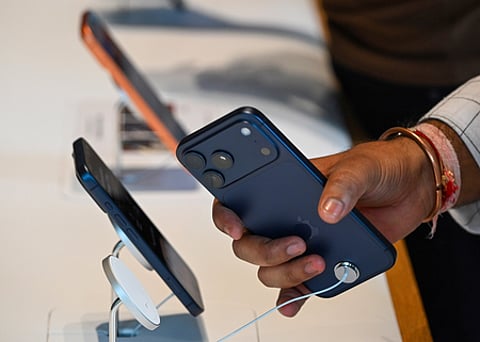

The global premium smartphone segment (wholesale average selling price of $600 and above) accounted for a record 29% of global smartphone sales in the first half of 2026, up from 25% in H1 2025 and 20% in H1 2022, says a new report by Counterpoint Research.
According to the report, the premium segment benefited from rising memory costs, which affected the low- and mid-tier smartphone segments more significantly. Premium smartphone makers were better able to absorb these costs through higher margins and reduced promotional spending, helping sustain demand despite challenging market conditions.
Between H1 2022 and H1 2025, the premium segment's growth was largely driven by the broader premiumisation trend, as consumers increasingly shifted towards high-end smartphones.
Brand performance in the premium segment
Apple recorded 9% year-on-year growth in H1 2026, driven by the strong performance of the iPhone 17 series, particularly the base model.
However, Apple’s share in the premium segment declined to 65% in H1 2026 from 74% in H1 2022, mainly due to intensifying competition in China, the world's largest premium smartphone market. Chinese brands such as Huawei, Xiaomi, OPPO and vivo strengthened their flagship portfolios, prompting more consumers to opt for domestic premium brands.
Samsung registered 3% year-on-year growth during the period and captured a 19% share of the premium segment despite the later launch of the Galaxy S26 series. The company said its industry-first Privacy Display has emerged as a key differentiator for the series, with the Ultra variant contributing more than half of the Galaxy S26 series sales.
OPPO posted the highest growth among premium smartphone brands at 69% year-on-year as it continued its premiumisation strategy. The Find X9 series remained the key growth driver, with additional momentum coming from new models launched in April 2026.
Vivo recorded 20% year-on-year growth during the period as the X300 series outperformed its predecessor in the first half of the year.
Commenting on the outlook, senior analyst Karn Chauhan said, “Premiumisation will be the key strategy in the smartphone industry as the focus shifts from shipment volumes to value and profit maximization. OEMs are targeting higher price segments to protect margins in a challenging market. On the other side, longer replacement cycles are prompting consumers to invest in premium devices for greater longevity. Apple and Samsung are expected to maintain leadership in the premium segment, supported by strong positions in developed markets, integrated ecosystems, and brand value. In China, Huawei and Xiaomi are well positioned to gain share in higher price segments as they expand their premium portfolios and strengthen their ecosystem offerings.”
