The Tamil Nadu Budget 2026-27 laid out an ambitious roadmap to transform the state into a $1.5 trillion economy, with a strong focus on artificial intelligence, industrial expansion, education, infrastructure and social welfare.
Among the marquee announcements was 'Arivagam', billed as India's first dedicated artificial intelligence city, along with a Space Industry Investment Zone spanning Thoothukudi and Tirunelveli to position southern Tamil Nadu as an aerospace manufacturing hub. The government also announced plans for a new logistics network comprising multi-modal logistics parks, dry ports and petrochemical industrial parks, besides new industrial parks in backward districts to attract investment.
In the education sector, the government allocated Rs 44,527 crore and announced the Tamil Nadu Student Housing & Infrastructure Corporation (TNSHIC), the Vetri Skill Training Scheme to equip youth with industry-ready skills, and a specialised Government Law College in Madurai from the 2027-28 academic year. An Overseas Tamil Investment Services Division will also be established to channel investments from the Tamil diaspora.
The Health and Family Welfare Department received Rs 23,357 crore, including Rs 560 crore for the 'Thaimaman Thanga Mothiram Thittam', under which babies born in government hospitals will receive a gold ring to encourage institutional deliveries. The budget also earmarked Rs 18.5 crore for expanding telemedicine services.
For the Welfare of Differently Abled Persons Department, the government allocated Rs 1,485 crore and announced financial assistance of up to 50% of the cost or Rs 30,000 for AI-based assistive devices. It also proposed establishing 'Nambikkai Illam' institutions to provide special education, rehabilitation and vocational training for persons with intellectual disabilities.
The Energy Department received Rs 15,828 crore, with the government announcing the replacement of 40,000 ageing transformers and implementation of the Green Corridor III project to strengthen renewable energy transmission and modernise the power grid.
The budget also allocated Rs 9,818 crore for the Social Welfare Department, while setting a liquor cess target of Rs 16,000 crore for the financial year.
The Tamil Nadu government will launch the 'Super Clean, Super Campus' scheme to ensure clean and safe school campuses. The initiative will provide for daily campus cleaning, safe drinking water, and round-the-clock security. It is being introduced with an integrated approach to provide professional housekeeping, maintenance, and security services across government schools. To be implement in 10,000 schemes in the first phase with an allocation of Rs 139 crores this year.
To modernise government schools across Tamil Nadu and equip them with all essential infrastructure, the state government will introduce the 'Palli Niraivu Thittam'. Under the scheme, infrastructure facilities will be upgraded in 3,734 government schools, including 2,514 primary schools, 365 middle schools, and 855 high and higher secondary schools, at an estimated cost of Rs 2,132 crore. For the current financial year, the government has allocated Rs 300 crore for implementing the scheme.
In a significant move for rural and underprivileged students, the government announced the establishment of modern residential schools under the Perunthalaivar Kamarajar Model Schools scheme. With an initial investment of Rs 125 crore, these schools will provide education, housing, and healthcare to students from the ninth to the twelfth grade at no cost to their families.
To strengthen anti-drug measures in schools, the Tamil Nadu government will form anti-drug clubs and volunteer units and publicise the 10581 helpline to create awareness. A 'Drug-Free Tamil Nadu' mobile application will also be launched, allowing students and teachers to anonymously report drug-related activities. The government has allocated Rs 7
The Tamil Nadu government will modernise public libraries by converting them into digital libraries with enhanced facilities. Co-working spaces will also be established in all district libraries. A sum of Rs 10 crore has been allocated for the initiative.
The government will provide bicycles, helmets and water bottles to 5.32 lakh Class XI students studying in government and government-aided schools. The scheme will be implemented for Rs 277 crore.
The Tamil Nadu government has announced an AI Economy Mission to train 5 lakh young people in artificial intelligence skills by 2031. The programme will be integrated into engineering colleges, polytechnic institutions and Industrial Training Institutes (ITIs) across the state.
An expert committee comprising academicians and industry leaders will be constituted to develop a dedicated AI curriculum aligned with industry requirements.
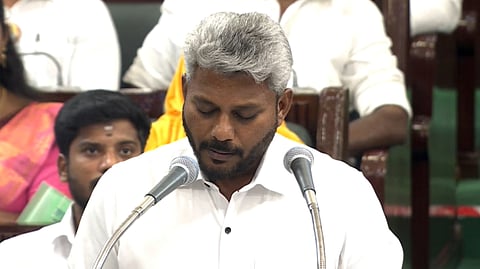
Finance Minister Marie Wilson said Tamil Nadu's financial liabilities have doubled over the past five years. She said the government has introduced a more transparent and accountable tendering system, replacing what it described as the earlier practice of awarding contracts to a select group of preferred entities or political affiliates.
The 2026-27 Budget says the state will continue to urge the Union government to abolish NEET and restore medical admissions based on Class 12 board examination marks.
தமிழ்நாடு நிதிநிலை அறிக்கை 2026-27
— Dr N. Marie Wilson (@MarieWilson_TVK) August 5, 2026
நீட் தேர்வு முறையினை உடனடியாக இரத்து செய்து, 12 ஆம் வகுப்பு பொதுத்தேர்வின் அடிப்படையில் மருத்துவக் கல்விக்கான சேர்க்கையைத் தொடர்ந்திட ஒன்றிய அரசிடம் தொடர்ந்து வலியுறுத்தப்படுகிறது.#TNBudget2026 #TVK #CMVijay #TNGovt #TNAssembly pic.twitter.com/DrnqMR8D8Y
The Tamil Nadu government has allocated ₹560 crore for the Thaai Maaman Gold Coin Scheme, under which children born in government hospitals will receive a 1-gram gold coin as a gift to celebrate childbirth and honour motherhood.
தமிழ்நாடு நிதிநிலை அறிக்கை 2026-27
— Dr N. Marie Wilson (@MarieWilson_TVK) August 5, 2026
அரசு மருத்துவமனைகளில் பிறக்கும் குழந்தைகளின் பிறப்பைக் கொண்டாடும் வகையிலும், தாய்மையைப் போற்றும் வகையிலும் தாய்மாமனின் அன்பளிப்பாக 1 கிராம் தங்க மோதிரம் வழங்கும் 'தாய்மாமன் தங்க மோதிரம் திட்டம்' செயல்படுத்தப்படுகிறது!
இத்திட்டத்திற்காக ₹560… pic.twitter.com/f6LloVA8ai
TVK regime's first TN Budget allocates Rs 812 crore for the gold coin and silk saree scheme, benefiting eligible women across Tamil Nadu as part of its welfare initiatives.
The Tamil Nadu government has announced that it will establish five regional cancer care hospitals under a hub-and-spoke model to strengthen oncology services across the state. The Budget also allocates Rs10 crore for cancer research and development.
Tamil Nadu has allocated ₹250 crore for tribal habitations to improve housing, roads, drinking water, livelihoods and education infrastructure.
₹1,485 crore has been allocated for the welfare of persons with disabilities, while ₹9,818 crore has been earmarked for social welfare and women's rights.
The government will continue providing marriage assistance, including 8 grams of gold and a silk saree, with an allocation of ₹812 crore.
Minority welfare measures include increasing the Haj subsidy from ₹25,000 to ₹35,000, support for Christian and Muslim women's self-help groups, and ₹34 crore for the development of burial grounds and cemeteries.
The Kamarajar Breakfast Scheme has been extended to students of Classes 6 to 8, benefiting 15.14 lakh students, with an allocation of ₹710 crore.
The government will establish 12 new old age homes across 12 districts with an allocation of ₹6.6 crore.
New initiatives for the transgender community include subsidised self-employment loans with grants of up to ₹50,000, 'Aran' shelter homes in five districts and short-stay homes in 15 districts.
Around 500 dilapidated Anganwadi centres will be rebuilt with improved child-friendly infrastructure, including drinking water, toilets and electricity.
Senior citizens' recreation centres with libraries, yoga, meditation and indoor recreational facilities will be established initially in five districts.
The allocation for the School Education Department has been reduced in the 2026-27 Tamil Nadu Budget. The department has been allotted Rs 44,527 crore, down from Rs 46,766.68 crore in the previous Budget.
For youth and sports, close to 100% increased. In 2025-26 it was Rs 572 crore, now it is Rs1051 crore.
Government will implement the 'Vetri Laptop Scheme' for college students. With an allocation of Rs 2,000 crore, this initiative aims to equip students with laptops as an essential learning resource.
Government will establish the ‘Tamil Nadu Student Housing & Infrastructure Corporation’ (TNSHIC) as a dedicated Special Purpose Vehicle, with an initial equity infusion of Rs.10 crore. Under the flagship 'TN-SUDAR' (State Upgradation, Development and Advancement of student Residences) initiative, we will construct 200 Integrated Student Hostels delivering 1 lakh modern beds across major educational hubs.
This project will be executed through a de-risked Public-Private Partnership (DBFOT) model, with an estimated capital outlay of Rs 3,200 crore, supported by a 2 0 per cent State Capital Construction Grant of Rs 640 crore, phased over the next two fiscal years. It will replace segregated housing with integrated, high-amenity campuses featuring fully air-conditioned study hubs, 24x7 security, hygienic kitchens and an automated allocation framework designed to ensure diversity and social parity.
A specialised Government Law College, offering advanced legal education on par with a School of Excellence in Law, will be established in the academic year 2027-28 at Madurai, with an intake of 300 students.
Tamil Nadu will set up an Overseas Tamil Investment Services Division to channel diaspora capital into the state, according to the 2026-27 finance statement.
The new body is intended to simplify investment and business set-up procedures for overseas Tamils, and forms part of a wider push to draw funds from the global Tamil diaspora into the state's economy.
To ensure that the youth of Tamil Nadu are equipped with cutting-edge skills that make them employable and develop entrepreneurial interest, this Government will introduce the 'Vetri Skill Training Scheme'. Under this scheme, the Government will provide industry-aligned skilling to 12 lakh college students and 1 lakh unemployed youth in this year.
The Tamil Nadu government has announced a series of major initiatives to strengthen the state's power infrastructure, with an allocation of Rs 15,828 crore for the Energy Department.
Also, 40,000 ageing power transformers across the state will be replaced to improve the reliability and efficiency of electricity distribution and reduce outages.
The government will also implement the Green Corridor III power transmission project to strengthen the evacuation and integration of renewable energy into the state's electricity grid, supporting Tamil Nadu's clean energy goals.
Tamil Nadu will build "Arivagam," billed as India's first dedicated artificial intelligence city, according to the state's 2026-27 budget document.
The project will house an AI university, an international skill development centre and a drone-testing research facility, alongside an integrated centre for AI, quantum technology and research, the document said. The government has allocated Rs 5 crore for a feasibility study into the project.
Tamil Nadu allocated Rs 23,357 crore for the Health and Family Welfare Department in the budget.
The State allocated Rs 560 crore for "Thaimaman Thanga Mothiram Thittam", a gold ring scheme for babies born in government hospitals. Finance minister while announcing the scheme said, this will reduce out of pocket expenditure for people as it will encourage deliveries at government hospitals.
The minister said, now 53% of deliveries are conducted in government hospitals.
The State also allocated Rs 18. 5 crore for telemedicine service in the 2026-2027 budget
தமிழ்நாடு நிதிநிலை அறிக்கை 2026-27
— Dr N. Marie Wilson (@MarieWilson_TVK) August 5, 2026
தாய் கேர்
கருவுற்ற பெண்களுக்கான சேவை மற்றும் உதவி மையங்கள் மாநிலம் முழுவதும் அமைக்கப்படும்.
மகப்பேறு நாள் நெருங்கும் வேளையில் தங்கியிருந்து பயன்பெறலாம்.
கட்டணமில்லாமல் உணவு மற்றும் மருத்துவ உதவிகள், தொடர் மருத்துவக் கண்காணிப்பு உள்ளிட்ட… pic.twitter.com/NrgR4clhrM
Tamil Nadu plans to build a new logistics infrastructure network — including multi-modal logistics parks, dry ports and petrochemical industrial parks — as part of its push toward the $1.5 trillion economic target, the state's 2026-27 finance statement said.
The government will also work to establish ancillary industries around these hubs, a move it said would further accelerate industrial growth. Separately, officials are conducting a feasibility study into sites for new ports.
Tamil Nadu will set up new industrial parks in its more backward districts, backed by world-class infrastructure and amenities aimed at investors, according to the state's 2026-27 finance statement.
The government projects Rs 3,200 crore in investment generation over the next five years through the initiative, which it framed as part of a drive toward equal and balanced industrial growth across all districts.
Tamil Nadu government allocates Rs 1,485 crore to the Department for the Welfare of Differently Abled Persons.
Financial aid of up to 50% of the cost or Rs 30,000 will be provided for AI-based assistive devices, including sports prosthetics, myoelectric upper-limb prostheses and cochlear implant batteries, which are not covered under the existing scheme.
Rs 4 crore has been allocated to establish ‘Nambikkai Illam’ institutions for persons with intellectual disabilities, to provide special education, early intervention, rehabilitation and vocational training.
Tamil Nadu will establish a Space Industry Investment Zone spanning Thoothukudi and Tirunelveli districts, positioning the state's southern coast as a hub for aerospace manufacturing.
The zone will be developed in partnership with IN-SPACe, India's space regulator, to provide shared technical infrastructure for space-sector investors. The government said the initiative — sited to leverage the Kulasekharapatnam rocket launch facility — would mark a significant boost to industrial growth in the southern districts.

