
NEW DELHI: National Security Advisor M K Narayanan has been trying to mould the Research and Analysis Wing in his own image for the past five years. All he has managed, say serving officers, is to consolidate his grip over RAW without improving it, thereby plunging morale to rock bottom. A series of unfortunate stewardships imposed from outside to fix RAW has driven it to the brink of incompetency and worse.
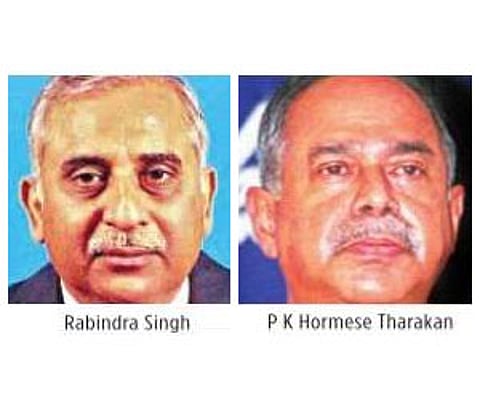
The first opportunity came when Rabindra Singh, a RAW joint secretary suspected of being a double agent, defected in 2004. Singh was handing RAW secrets over to the USA, to where he fled from Kathmandu via Vienna once he was discovered.
Narayanan wanted to sack the then RAW chief C D Sahay. He began systematically undermining Sahay; he planted his own man, P K Hormese Tharakan, former Kerala police chief who was occasionally deputed to RAW, as Sahay’s eventual successor. The then NSA, J N Dixit, countered that Narayanan himself had not been sacked when Rajiv Gandhi was assassinated (Narayanan was the IB chief), and that no intelligence heads rolled after the Kargil intrusions were discovered.
(Incidentally, no intelligence chief was sacked after 26/11; the NSA also remains untouched). Dixit died in early 2005 and Narayanan, who replaced him, had a free hand to fix RAW.
Tharakan was not a terrorism expert, nor a Pakistan expert, nor a China expert.
He was, stress erstwhile colleagues, a Yes-man to the NSA. Polite and affable, he dithered over crucial decisions – until the NSA prompted him. He presided over a post-Rabindra defection enquiry that has not damaged a single officer’s career; in some cases, the opposite has happened.
Shashi Bhushan Tomar was the last man to see Rabindra Singh after the latter’s car was searched as he left RAW HQ in Delhi on April 19, 2004. Tomar, suspect colleagues, tipped Singh off that he was under RAW surveillance, enabling the double agent to evade his stake-out and escape.
Singh fled to the US, and Tomar, believe it or not, is now posted in New York. Perhaps the two meet for a drink, suggest RAW officers, who add that perhaps the two raise a toast to Narayanan.
That the NSA wasn’t “really” interested in solving the mystery became evident to those who attended the handful of meetings in which videos and audios of Singh’s surveillance were scrutinized by Narayanan and others.
Strangely, the NSA never once bothered to call the man in charge of the surveillance, Special Secretary Amar Bhushan. N K Sharma, a director-level officer who worked with Bhusan, was denied a foreign posting till the enquiry’s completion; he is now back from a European posting at the RAW’s training facility in a Delhi suburb where his hands are full with Nisha Bhatia, the RAW officer who recently consumed rat poison outside the prime minister’s office (she has been deemed unemployable under a specific government rule).
Another example of Tharakan’s pliability by the NSA came with the question of a cadre review. Former RAW chief A S Dulat was mandated by the NDA government to submit a cadre review of the RAW. This went into improving prospects of various categories of officers; creating new posts; and looking at the issues of insiders, outsiders, deputations and permanent secondment – aspects crucial to a mixed cadre outfit like the RAW’s.
Imbalances would lead to administrative chaos, as indeed has happened the last few years. The NSA wanted a review of the review, and subsequently Tharakan rejected much of Dulat’s suggestions (made on Sahay’s advice).
This rejection stank of an agenda.
That agenda became clear when the next RAW chief took over.
Also read:
Part 2: Mathur's free run in Pakistan
Part 1: Morale is low and expertise even lower
