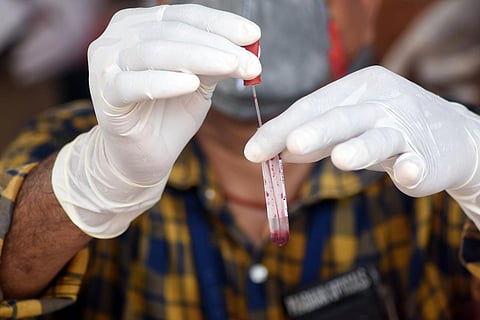

NEW DELHI: As the threat of a new Covid variant BA.2.86 or Pirola emerges globally, a survey has found that official data is underreporting cases in India as people are avoiding RT-PCR testing despite having symptoms.
It said that despite the official Covid-19 figure remaining low, there is a need to comply with COVID norms as 22 per cent of Indians were reinfected multiple times, spelling a long-term impact on their health.
The survey also said that of those who have had Covid to date, 46 per cent of the respondents claim to have been infected in 2023, which the official data doesn’t show, while 93 per cent were infected in 2022.
The survey, conducted by Local Circles, India’s leading community social media platform, surveyed 32,000 people in 319 Indian districts.
It found that 63 per cent have had symptomatic Covid, while 22% have had it multiple times in the last 40 months. In 20 per cent of cases, the subsequent infection was more severe or persisting. Two per cent said they were infected five times or more with Covid-19.
Of the Indians surveyed who have had multiple COVID-19 infections, a quarter have had it in 2022 and again in 2023. Of those who have had Covid to date, 46% of the respondents claim to have been infected in 2023, while 93 per cent were infected in 2022.
20% of respondents who had Covid multiple times had a severe, persisting or prolonged Covid-19 infection during the re-infection.

“A large majority of people are not getting RT-PCR tests done to validate COVID, and hence these numbers are not reflected in any state or central government-reported COVID-positive data. Government data has been reporting that India has less than 100 cases a day for several months now,” the survey pointed out.
It said the new COVID-19 risk reminds us that compliance with COVID-19 norms must continue when people around us are unwell. The risk of re-infection is still there after recovering from one or more previous infections.
“Despite most infected people recovering from COVID, there are still many who are yet to recover fully or have developed new health problems,” Sachin Taparia, founder of LocalCircles, told this paper.
He said as new Covid variants like BA.2.86 with over 35 mutations rise worldwide, the wise thing to do is to follow COVID norms and protect oneself from a re-infection.
“However, with no government mandates on COVID compliance, no real case data, and almost all writing off Covid and its impact, it is going to be a lot harder than ever before,” he added.
Dr Rajeev Jayadevan, Co-Chairman of the National Indian Medical Association (IMA) COVID Task Force, said that people seem to think COVID has gone away, which is untrue. In the US, COVID-19 is spreading in over 22 states with a proportionate rise in hospitalization as expected - when Covid occurs among vulnerable people.
“Vulnerable people exist in every community. Even though young and healthy people might see it only as a common cold, the story could be different among people who are elderly and those with comorbidities,” he added.
“Interestingly, the study finds that 46% of all people surveyed were infected in 2023. This is not reflected in the officially reported numbers," he highlighted.
COVID-19 cases have witnessed a surge in various countries, especially in the US, UK and China, triggering fresh concerns about the resurgence of COVID-19, which has been declared no longer a global threat by the World Health Organisation (WHO).
The new strain BA.2.86 or Pirola is causing a higher rate of infections across multiple regions globally. Not just Prirola, EG.5.1, which has been nicknamed Eris, is also infecting people. Both originate from the XBB lineage, which descended from Omicron. The two variants are under observation by the WHO.
He said testing has dropped in many countries, and officially reported numbers will no longer show the true extent of disease in the community.
The past president of IMA Cochin said that many people, unfortunately, still believe that if they get COVID-19 once, they will not get it again. “This misconception makes some individuals drop their guard, leading to reinfections,” he added.
He said another myth is that repeated Covid infections “is a good thing” and will generate “more immunity”.
“This is wrong. Not only does the study confirm that the second infection was more severe in one-third of the cases, but it has already been established that a greater number of infections leads to poorer health. The second infection was milder in only one-third of cases. Therefore, people who have been infected are best advised not to get infected again,” Jayadevan told this paper.
He further said that several extensive recent studies have shown that having had COVID-19 in the past raises the risk of death and hospitalizations for at least two years after surviving it. This is not observed with other infections, such as the common cold.
Taparia added that there are concerns about the possible long-term impact of the COVID-19 infection on various body organs and new health conditions like high blood pressure, diabetes, sleep apnea, and liver cirrhosis being reported in some individuals.