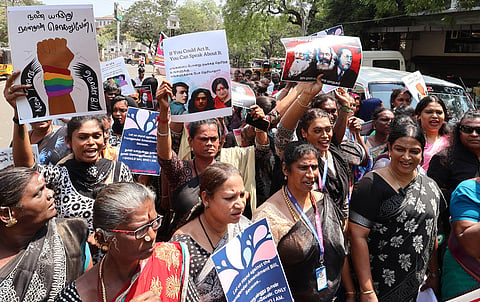

The recently enacted Transgender Persons (Protection of Rights) Amendment Act, 2026 has drawn criticism from a transgender rights advocate in Himachal Pradesh, who says the law falls short of ensuring dignity and autonomy for transgender individuals who do not identify with traditional eunuch communities.
Maya Thakur, a transgender woman working with the Solan election department, said the legislation should have retained provisions for self-identification rather than shifting to a medical board–based certification system.
Speaking to PTI, Thakur said transgender identity should be recognised based on an individual’s lived experience and self-perception rather than physical examination. She argued that the new framework risks reinforcing invasive verification processes and undermining personal dignity.
The amended law replaces self-declaration with certification by a government medical board, mandates reporting of gender-affirming surgeries to district authorities, and has drawn criticism for narrowing the scope of recognition for self-identified gender identities.
Thakur also raised concerns about social pressure faced by transgender persons who do not belong to traditional “kinnar” or eunuch communities, saying many educated individuals seeking mainstream employment face discrimination and coercion from established community networks. She called for legal safeguards for those who wish to live independently outside such structures.
In a letter to the Ministry of Social Justice and Empowerment, she urged the government to explicitly protect transgender individuals from harassment and to ensure that identity verification, where required, is conducted by authorised officials without community-based interference. She also called for stronger measures against alleged practices of coercion within certain traditional groups.
The Act provides penalties for physical, sexual, verbal and emotional abuse of transgender persons, but critics, including opposition leaders, argue that the amendment makes legal recognition more difficult by removing self-determined identity provisions and introducing institutional certification mechanisms.
The legislation also establishes an authority to determine transgender status, a move that has drawn further criticism from civil rights advocates.
The amendments were assented to by President Droupadi Murmu, following passage of the bill in Parliament. The law will come into effect on a date to be notified by the Central Government in the official gazette.
(With inputs from PTI)
