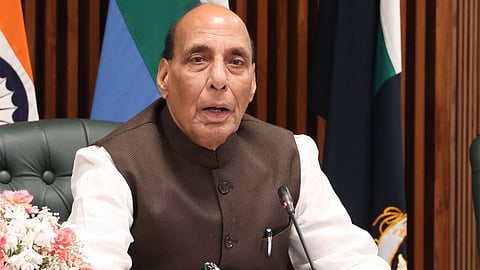

NEW DELHI: With India’s Rs 1 lakh crore P-75I submarine programme in advanced stages, Defence Minister Rajnath Singh will travel to Germany on Tuesday for a three-day visit, with the deal expected to move forward. Sources said the contract could be inked during the visit.
Singh will hold talks with German Defence Minister Boris Pistorius and senior leadership in Berlin, with a bilateral defence cooperation roadmap expected to be signed. The document is understood to cover co-development, co-production and emerging domains including artificial intelligence, cyber capabilities and unmanned systems, areas both nations have identified as priorities in their military modernisation drives.
An implementing arrangement on UN peacekeeping training is also on the agenda, according to a government statement released Monday.
The visit, the first by an Indian defence minister to Germany in six years since Nirmala Sitharaman’s 2019 trip, comes at a moment of growing strategic convergence between India and Germany. Pistorius had visited India in 2023, and the two sides have since worked to move the relationship beyond rhetoric toward concrete industrial collaboration.
Singh is also expected to meet senior German industry leaders on the sidelines to accelerate joint manufacturing under the Make in India framework, with defence corridors in Uttar Pradesh and Tamil Nadu among the platforms being offered to potential partners.
At the heart of the visit, however, is the P-75I programme. It envisages the construction of six next-generation diesel-electric submarines in India, equipped with air-independent propulsion for longer underwater endurance, advanced stealth features and land-attack cruise missile capability.
The Indian Navy has been pushing for an early conclusion of the contract, given that its conventional submarine fleet of around 16 boats is ageing rapidly with no replacement pipeline in place.
At current rates of decommissioning, the fleet risks falling to single digits before new submarines enter service, a scenario that could significantly affect India’s underwater deterrence, particularly in the Indian Ocean Region where Chinese naval presence has grown.
