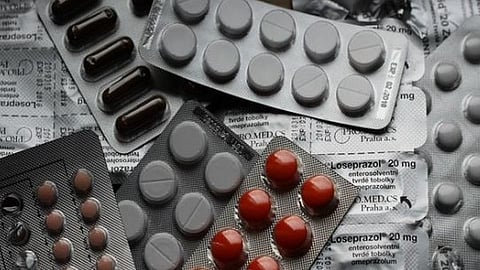

CHANDIGARH: The pharmaceutical supply chain has been disrupted by the ongoing West Asia war, pushing up the prices of critical raw material by 200-300% in just fifteen days. As a result, drug manufacturers are warning of increase in prices of medicine and hinting at supply shortages if the situation continues.
There are around 650 pharmaceutical units in Himachal Pradesh which produce approximately 25% of all the medicines supplied across the country.
The Himachal Drug Manufacturers Association (HDMA) has urged the Union Government for formation of Emergency task force with industry representatives and immediate implementation of Essential Commodity Act 1956.
Talking to TNIE, Sanjay Sharma, spokesperson of Himachal Drug Manufacturers Association (HDMA), said that if the present conflict in West Asia continues then there is bound to be shortage of medicines due to the shortage of raw material. He said that, at present, about 40% of the supply has been cut and the prices of raw material have increased by 150-200%.
In the last fortnight, the price of paracetamol alone has increased to Rs 450 per kg from Rs 250, as many manufacturers have no option but to buy material at increased rates.
"The production is less as now our units are operating in eight hour shifts instead of 24 hours,’’ he claimed, hinting at job cuts.
In a letter to the Ministry of Chemicals and Fertilizers and also Department of Pharmaceuticals, the HDMA has urged that that unchecked price escalation and supply constraints have made production increasingly unviable.
As there is an unprecedented 200-300% price hike in active pharmaceutical ingredients (APIs), solvents, excipients and packaging materials, production contracts have become unviable.
To further complicate the problem there is shortages of LPG for boilers and industrial production as well as domestic LPG shortages this could lead to migration of labour, further affecting production capacity in the coming days thus threatening micro, small and medium enterprises (MSME) segment’s survival and essential medicine supply.
Without timely intervention, rising raw material costs could disrupt production and undermine the availability of affordable medicines.
Thus intervention has been sought from National Pharmaceutical Pricing Authority (NPPA) to regulate the escalating costs of raw materials and packaging inputs such as aluminium, PET, craft paper and glass bottles.
Surinder Duggal president of Punjab Chemist Association which has 27,400 members across the state, said that the coming day rates of all types of medicines are going to increase due to the increase in raw material costs, ingredient cost, aluminum foil cost and other solvents.
The government should have taken the strict measures to control the prices of medicines particularly medicines which are regularly used by the patients like analgesic (paracetamol) and other diabetic formulations, he said.
The prices of cancer medicines which are imported from US and European countries are bound to increase in the coming days.
"It looks like that the rates of all medicines will increase by 20-25% in near future, if the situation does not improve immediately. At present there are no hike in rates, but as the stock of medicines are decreasing due to shortage of raw material and solvents, there will shortage and increase of rates of medicines," he said.
Medicines like paracetamol and ibuprofen are derived from petrochemicals while metformin which is prescribed drug for type 2 diabetes is composed of nearly 80-90% petrochemical inputs. Phenol, a key compound in drug synthesis, originates from petrochemical processes.
