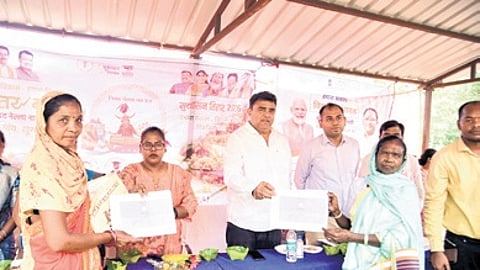

RAIPUR: Amid the intense summer of May, a movement to make governance more responsive begun across the villages and cities of Chhattisgarh on Friday. The Sushasan Tihar 2026 campaign, designed by the Chhattisgarh government to take the administration to the citizens’ doorsteps, commenced on May 1 and will continue till June 10.
According to the government, the aim of the initiative is to ensure that citizens’ grievances are resolved on the spot, for which the administrative machinery, led by Chief Minister Vishnu Deo Sai down to district collectors, will be actively present on the ground.
Through home visits and special grievance redress camps, the administration will process applications on-site, prepare files immediately, and deliver solutions without delay. Collectors were earlier directed to prioritise the disposal of pending cases by April 30, so that the new initiative could start on a clean slate.
The campaign specifically targets revenue matters, such as mutation, partition, and demarcation, pending MGNREGA wage payments, issuance of income, caste, and domicile certificates, as well as issues pertaining to essential services, like electricity, transformers, and drinking water among others.
Government sources say a new working model will be visible at the grassroots level under this initiative. In rural areas, camps will be organised in clusters of 15–20 gram panchayats, while in urban areas, ward-based clusters will be covered.
These camps will receive grievance applications from common people and ensure on-the-spot delivery of benefits to eligible beneficiaries. A maximum period of one month has been set to resolve each grievance.
A key highlight of the campaign will be the chief minister’s surprise visits to these camps. He will travel to different districts, inspect development works, hold direct interactions with villagers in local gatherings, and assess their concerns.
Officials say that accountability will be fixed on the spot and directions for immediate resolution will be issued. Ministers, MPs, and senior bureaucrats will regularly visit these camps, interact directly with citizens, and monitor the arrangements under the initiative. This is expected to make governance more transparent, senior officials believe.
Sushasan Tihar ’26
The campaign commenced on May 1, will continue until June 10
Through home visits admin will process applications on-site, prepare files immediately, and deliver solutions
In rural areas, camps will be held in clusters of 15–20 gram panchayats, and in urban areas, ward-based clusters will be covered
Ministers, MPs, MLAs, and senior bureaucrats will regularly visit and monitor arrangements
Campaign specifically targets revenue matters such as mutation, partition, and demarcation, pending MGNREGA wage payments
