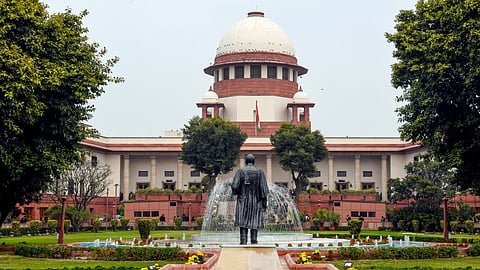

In a rare and scathing rebuke of its own back-office, the Supreme Court on Monday lashed out at the apex court Registry, terming its conduct "nasty" and saying its officials think they are acting as "super Chief Justice of India."
A bench comprising Chief Justice Surya Kant and Justice Joymalya Bagchi made the observation while hearing a bail plea filed by Ayushi Mittal alias Ayushi Agarwal, an accused in an alleged investment fraud to the tune of more than Rs 37,000 crore.
The CJI referred to an order passed on March 23 on the plea, and wondered how the registry officials construed that the bench did not issue notice to the Enforcement Directorate and other respondents on the plea.
"The registry is acting very nasty," the CJI said, adding, "Very nasty registry... Each one sitting here considers themselves as super Chief Justice of India."
The bench in its fresh order said, "Notice has not been issued to the ED director stating no such order was passed. Let a fact finding inquiry be undertaken by the registrar judicial (of the apex court) as to how our March 23 order does not mean notice to the ED. Let notice be served to the Directorate of Enforcement."
The petitioner, Ayushi Mittal, her husband, and their company are accused of orchestrating a massive investment fraud.
While the defence claims a substantial portion of the funds had been returned to the investors, several hundred crores of rupees remain in bank accounts currently frozen by the ED.
In its March 23 order, the bench had allowed an oral prayer by the counsel for the Rajasthan government, a party in the case, to make the ED a party to the proceedings.
The purpose was to determine whether all movable and immovable assets belonging to the petitioner and her extended family had been properly attached.
The bench reiterated that it would not consider the merits of the bail plea until a "comprehensive description" of assets is provided.
It had ordered the petitioner's legal representative to file an exhaustive affidavit detailing the immovable properties owned by the petitioner, her husband, their children and parents and siblings and parents-in-law.
It also sought details of assets of the company directors, managers, and key staff members.
"Until such complete details are provided, we will not consider the plea for bail on its merits," the bench had said.
The registrar judicial has been tasked with investigating the administrative lapse within the Registry to identify why the court's previous instructions were ignored.
The bench said it will list the plea sometime in May.
