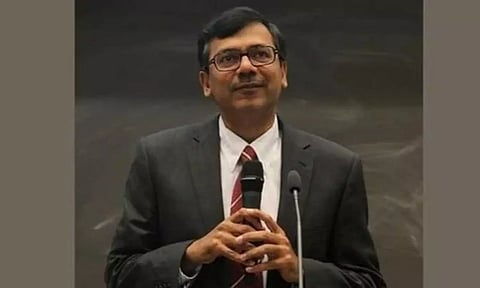

NEW DELHI: India needs to develop its own context-specific model for diagnosis, treatment and prevention of rare diseases instead of relying only on western frameworks, Indian Council of Medical Research (ICMR) Director-General Dr. Rajiv Bahl said on Tuesday.
Addressing the two-day national conference on rare diseases organised by the Union Health Ministry here, the director general of the Indian Council of Medical Research (ICMR) said, “While developed countries have greater resources, India can leverage its strengths through population-based approaches, preventive strategies, and the effective use of digital technologies, including social media and emerging tools such as artificial intelligence, to expand outreach and improve early detection."
Highlighting ICMR efforts, he said work is underway to expand tools for managing rare diseases, including promoting indigenisation of therapies and domestic production of affordable alternatives to high-cost drugs with support from Centres of Excellence.
According to WHO, rare diseases are lifelong disorders with a prevalence of one or less per 1,000 population. India’s National Policy for Rare Diseases (NPRD) 2021 provides financial and technical support for treatment of 63 identified diseases, including assistance of up to Rs 50 lakh per patient at designated Centres of Excellence.
Dr. Bahl said repurposed drugs can improve outcomes and quality of life, adding that six such drugs have been identified for clinical use in rare diseases. He also highlighted work on advanced technologies such as gene therapy in collaboration with institutions including the Department of Biotechnology and the Council of Scientific and Industrial Research.
He said India has made steady progress in rare disease care over the past three decades. “Today, while even financial support of Rs. 50 lakh per patient may seem insufficient given the high cost of therapies, it represents remarkable progress that the country is now able to meaningfully support children affected by rare diseases,” he added.
He stressed the need for optimal use of resources and highlighted family-based approaches, including genetic analysis and antenatal diagnosis, for prevention and early intervention.
Union Health Secretary Punya Salila Srivastava said the government has exempted life-saving drugs from basic customs duty and encouraged suggestions for further exemptions. She emphasised early diagnosis, genetic analysis and coordinated efforts among stakeholders.
She said the Unique Methods for Management of Inherited Disorders initiative is being operationalised through NIDAN Kendras, with genetic counselling services strengthened, and around 1,800 patients already supported under the rare disease policy.
