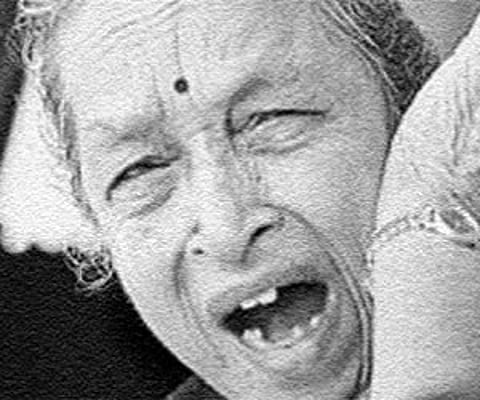

Another colossal era in the Indian music comes to an end this year. Gangubai Hangal is no more. As the Kirana gharana maestro sets for her final journey, probably her shortest and the least tiring one, our musicians’ hearts would cringe over another loss. Some insecurity would set in their warm hearts over how time can pull the curtains over an artiste divine, and skills timeless.
Like Pt Sajan Mishra, the Benaras Gharana maestro. He says, “It will take a 100 years for another Gangubai to be born.”
Disturbed by the death of her daughter and disciple Krishna six years ago, Gangubai would express her doubts on whether she could really pass on her lineage to a deserving disciple. “I don’t think these young people can put even a fraction of the labour into music required to become a great maestro. They know how to earn money, they know how to earn fame.”
Gangubai fiercely lived by the expectations of her guru, legendary Sawai Gandharva — like an ideal father’s favourite daughter. While Gandharva’s other disciples — Bhimsen Joshi, Firoz Dastur, Sangameshwar Gurav and Basavraj Rajguru took some liberties in following the guru’s gayaki, Hangal preferred to cling, rather passionately, to her guru’s style. Then, there is something unusual about this guru-shishya relationship. In the fraternity, we usually hear stories about how gurus would walk out for a stroll every time the shishya would sing a taan or paltaa wrong.
Gangubai’s guru, on the other side, would keep the faith in the lady from Hubli and encourage her till she got the taan or swara right. As a result, she believed in music instruction values that would attract the most toughened students of music. She was taught that while hitting upon a swara, one should behave like a miser — parting with the swara with care, clarity and thought — this would make the listener realise the sanctity and value of each note. The lessons had a great impact on approach to singing. It is simple, yet the most aggressively pure. She would sing the alaap in Baageshree long enough to extract every mood out of this sensual melody — in an extremely meditative way. Gangubai, during her days as a disciple would be taught ragas, one after the other, without the names being revealed. This exercise made her so naturally powerful when it came to the swara vistaar (progression, improvising).
She would, in her gaayaki, leisurely reflect on the raga swarup (the structure of the melody). Unfortunately, one really has the time for such divine details now and the most successful musicians are talking about “repackaging” the khayal.
The nayika in her compositions would always come across as someone mocking at one politically superior, craving, pretentiously strong male. She would reveal an unsparing feminist sound to her music.
Hangal would believe in being unconventional and steadfast. She would refuse to sing bhajans at concerts. Singing devotional music, she had believed, would dilute the purity of the khayal singing. At lecture demonstrations, she would even refuse to interact with students. Dr Kiran Seth, the founder of Spic Macay, remembers cajoling her for interactions before or after a performance. “She would simply refuse to talk during a performance. She would say she cannot be ‘inward’ and ‘outward’ at the same time.”
Benaras gharana maestro Rajan Mishra once told me about the people in the Yadav clan in the holy city. The bit about the Yadavs has an association with Gangubai’s life. The people in the Yadav clan in Benaras used to live at the back of Kabir Chaura, the street in Benaras which has been a home to many music legends. They were traditionally milk sellers. They would come over to Kabir Chaura with the cans of milk during the morning and the evening time and sit outside the musicians’ houses for hours, listening to khayals, bhajans and tabla recitals.
As a result, a lot of milk sellers would know the compositions sung by the upper-caste musicians, and would sing them beautifully. Their skills and bhava would impress the best of gurus residing in the Chaura. But, the milk sellers would remain milk sellers — preferring to keep within the limits of our rigid, cold, caste system. Unlike Gangubai Hangal — who had belonged to a family of boat men, and had succeeded in breaking into the Brahmin households, winning their hearts with her singing skills, when she would be “called over” by her upper caste neighbours to sing occasionally, at festivities.
Incidentally, Gangubai used to visit to the Mishras in Kabir Chaura. Those were the times when Pt Gopal Mishra, uncle of Rajan- Sajan, would perform on the saarangi with Gangubai.
She was remarkable for her kind of values. She would prefer traveling in the trains and would refuse air tickets from organisers. She would never ask for five star accommodations — this makes her very similar to a stubbornly simple Ustad Bismillah Khan. We can’t see them being born again. It’s true.