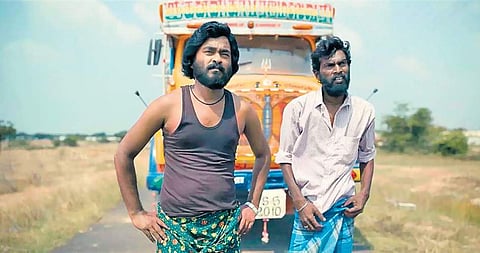

Serial killer turned into web series hero

A millennial I am, at least by the vague birth year categorisation, but contrary to media reports I certainly am not one that grew up knowing about ‘Auto Shankar’.
Serial killer turned into web series hero
Updated on
3 min read

A millennial I am, at least by the vague birth year categorisation, but contrary to media reports I certainly am not one that grew up knowing about ‘Auto Shankar’. The kuzhakattai kadhai would have me in tears so even the popular poochandi was a rare threat. My parents definitely did not mention ‘Madras’s mass murderer’ in my formative years and I doubt very many ‘normally’ formed young people took an interest in serial killers. I heard about Gowri Shankar for the first time when the series’ trailer was released and wondered then why a biopic about a criminal who was hung over two decades ago is being made. 
Biopics are usually made for one of the two reasons — either to bring to light someone who deserves focus or to retell the story of someone well known — and though the trailer hinted that it was going to be centred around the criminal, I hoped the treatment would make all the difference. I must say now, after having watched all the episodes of what is a hardly binge-worthy material, that I was disappointed and had many thoughts:

  1. A biopic could celebrate or denigrate a person, or use a person’s life to make a good film. In this case, the life of Auto Shankar seems a big boring excuse to experiment with OTT platforms and push the boundaries of censorship — the sex, drugs, blood, and gore associated with the man provide fodder and publicity to the show.
  2. This thought follows the one above. What other reason could there be to make a series on the life of a convicted criminal, centre it on him, to make him a result of his experiences and a pawn in the hands of other powers, and to build a case that builds sympathy for him? Any other narrative would not ask the audience to absolve him of his crimes; nor would it able to ride on the excessive usage of sex and swear words.
  3. The series then serves the former purpose of making a biopic  and whether it intends to or not, brings to the mainstream a man that is better forgotten. Does the story of a criminal deserve to be told? Yes, it does. But it matters how it is told, what one expects of its audience, what justice serves to those affected by the criminal, for their stories are tied into his.
  4. Structural violence (in this case a neglected childhood, abject poverty) may be what turns people into serial killers and those rejected by society into sociopaths, but solely blaming the structures that fell through for the unhappiness inflicted by these men on others without showing them take responsibility or feel remorse for their actions, as this series does, speaks of creators’ responsibility, and ways privilege and positionally in writing and producing is still lacking.
  5. Yes, we are in the middle of a biopic overdose, hoping the largeness of the personality will rake in the money. But the biopics about the already well-known don’t offer a space for critique of their lives (tell me, do you think movies on certain chief ministers will touch upon corruption or those about Prime Ministers feature him planning pogroms?), and a series such as these by claiming they are fictionalised even while trending a ‘themanwhoshookmadras’ hashtag bring to life an urban legend that best remains like his victims, buried forever.
  6. In the series, Auto Shankar claims to take inspiration from cinema, and maybe the real one did too as suggested by a top police officer. Where the line between the real and reel is so permeable, I wonder if this will form the inspiration to some wanting to follow his footsteps? 
  7. A biopic immortalises a person and could be a record of their life years. It serves as a tool of memory, and I ask with this series, what have I to lose if I don’t remember Auto Shankar, and suggest instead like New Zealand Prime Minister Jacinda Ardern did in making the Christchurch terrorist nameless, that we deny criminals the publicity they seek, even in death. Most importantly I ask that we make no excuses for them, and not use them as an excuse to create content.

X
The New Indian Express
www.newindianexpress.com