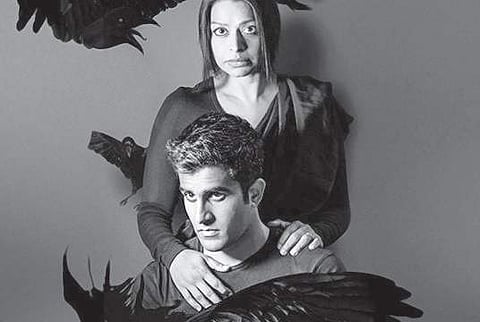

Chennai-ponnu Anupama Chandrasekhar’s original play When the Crows Visit is having its world premiere in a faraway city that only has a handful of ravens to call its own. The play itself hits too close to home, and not only because it revolves around a Chennai-based family. When the Crows Visit is about the truths that a mother and a grandmother are forced to confront when the son is accused of sexual violence, both — of the man they have made and the men that made them.
Anupama explores the themes of Ibsen’s Ghosts in her play, keeping the ghosts of the long-dead alive through the crows, replacing the disease in the older play with another kind that continues to plague us — protection of the perpetrator for the sake of greater good (read: what will people say/we are so few of us/it will fracture us/what is the use). The theme of the individual versus society, and the ways in which it falls on women to keep the family’s name together even when they themselves are falling apart are preserved in Anupama’s play.
I saw a bit of Dickens too in the play’s past, present and future trajectories. There is behind the women, a life lived with a monster, the present grappling with the monster they have raised as a result of their violent yet silent pasts, and a future that could do many ways depending on what they are willing to lose now. Crows hold spiritual value and are believed to be forefathers who revisit their homes by some communities, and to the play, they lend this lore helping connect the before, the now and the later.
“The house is cursed,” says the grandmother repeatedly. I saw the curse of the inner patriarch, and the work of internalised misogyny in the women of the house — belief in oppressive traditions, feeling the need to safeguard the sanctity of and upkeep structures of families and other institutions over the well-being of individuals, building the binary of the good and the bad woman, being the woman that wonders if it really happened, or what she did to deserve it, protecting the men we know and feeding a never-ending cycle of oppression.
In the crows that we see continually as a nuisance, curse and remember only when we clean bike-seats and car screens, and hear a loud plop of kaakaapee, I saw keepers of memory. Annoying, hidden away, sometimes boring, sometimes dangerous, but always powerful memories — reminders of who has done what lest we forget, and to remember, so we never let it repeat itself. In the policeman, I saw our own complacence as a society, the ways in which survival means little, and death may only trigger off a slight reaction prone to forgetting soon. In the maid I saw many thousands of young girls, each with her own struggles and dreams, all wanting just to be a little safe.
In the man accused of the crime, I saw a little bit of every man I know. And I know too, that instead of protecting ourselves from the monsters we create, we must stop policing ourselves, change the present to prevent the making of monsters, instead of shielding our beloved structures from shame we must raze them to the ground, that we can do this if we listened to the crows, raised better sons and maybe re-named Men’s Day to be Day of the Dead (Inner) Patriarch.
