
You could say that ancient wisdom in India took care of everything. It extends to non-hman domains, too. The Yajurveda instructs, “Protect our bipeds and quadrupeds.” But the ancients living in pastoral bliss may not have come across the peculiar challenges of animals—domesticated, patronised or commercialised—in modern India.
The love for animals, it seems, cuts in more ways than one. It was heartening to read about memorial stones for dogs in Visakhapatnam’s beachfront with inscriptions such as “Missed beyond measure” and “Until I meet you in the afterlife, rest in peace in heaven”.
Animal love is sacred, but new-age urban living in apartments on bustling streets makes it complicated. My childhood memories of barking dogs and superstitions about cats come in the way of my own. This week, a happy black labrador wagged its tail outside as the lift door opened with me inside, but I politely offered a tense smile, making my sensible neighbour go towards the other lift.
As many in urban India would testify, one man’s pet can be another man’s peeve. Sharing elevator space, now being gently corrected to reduce caste and class barriers among humans, still has the animal barrier that’s not so easy to cross. Taking ownership for dog poop in shared streets and common areas is often a matter of conflict.
Sacred cows and less holy bulls are complicating the issue further. There was a time when a Western journalist landing in India would despatch one of his first stories about cows walking the capital’s roads as a matter of amusing newsworthiness. In suburban Delhi, cows are reverse-swinging to Vedic glory in everyday living. Carts roam the streets to collect wasted food and greens to feed cows.
The problem is that the eager lovers of cows and dogs often simply place the food on pavements. In return, the thankful animals offer excrement that hamper morning walkers who must also negotiate vendors. There’s not much you can do when the common area in question is in a municipal zone of benign neglect.
Jawaharlal Nehru once famously wrote that Indians tend to worship cows but also occasionally beat them, observing that kindness and worship do not always go together.
Cow slaughter has been a matter of constitutional importance in India, where the non-enforceable Directive Principles of State Policy asks the State, under Article 48, to prohibit the slaughter cows. The Prevention of Cruelty to Animals Act, 1960 and Wildlife Protection Act, 1972 outlaw the training and exhibition of animals such as tigers, bears, monkeys and bulls in circuses, and require domestic animals to be registered. The Animal Welfare Board can crack down on circus performances if they cause “unnecessary pain”, but the law can be liberally interpreted because the show must go on.
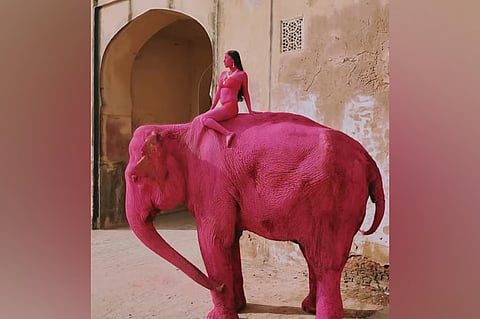
Where does all that leave an elephant painted pink in Jaipur that died? The animal died of natural causes at age 67, above the average life expectancy of the Asian elephant. But a photographer faced protests when pictures of the elephant painted pink in the Pink City went viral. An activist of the People for Ethical Treatment of Animals (Peta) even wants a ban on elephant rides.
That the pink elephant became a red rag for animal rights activists is symbolic of a grey area in India where NGOs, common citizens, pet lovers and law enforcers are often locked in tussle.
Lakhs of people thronged the roads in 2017 demanding reversal of a Supreme Court ban on jallikattu, the annual bull-taming event, on the ground that it involved cruelty. The ban was seen as an assault on Tamil culture. The reborn jallikattu now enjoys corporate and political patronage that almost resembles the Indian Premier League. The culture versus cruelty conflict is not easy to negotiate.
But organisations like Peta are representative of a new wave of animal love that stretches from vegan diets to street protests.
Pet activists now range from casual stray cat lovers to legal hawks filing court cases. A slew of startups specialising in everything from e-commerce to vet clinics and pet grooming with names like Dogsee, DiagnoPet and Supertails are proof of the industrialisation of animal care. There’s even a startup called TailsMart that promises AI-powered animal care.
American ecologist Garrett Hardin proposed a theory called the tragedy of the commons, in which individuals acting in self-interest can deplete shared resources despite knowing it harms the group’s long-term interests. He wrote of “the damage that innocent actions by individuals can inflict on the environment”.
Now, where does animal love figure in this? Clearly, there is a thin line dividing cruelty from care if the common spaces Hardin spoke of involve inconveniences caused to humans in city streets, parks and apartment blocks.
Taking a cue from this election season, what we perhaps need is a model code of conduct on animal welfare, in which the spirit of the law could be harmonised with enforceable practices that do not hinder humans. Now, who will bell the cat?
(Views are personal)
Read all columns by Madhavan Narayanan
Reverse Swing
Madhavan Narayanan
Senior journalist
On X @madversity
