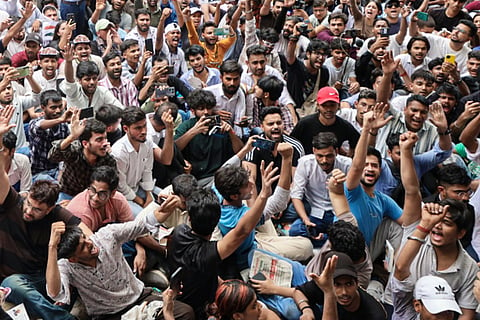

For the youth today, increased competition, shrinking opportunities and a foggy road ahead are the signs of the times. The impact of unexpected systemic jolts—be it the cancellation of the NEET examination or tightening of visa rules for study and work abroad—is what they have to deal with. The CBSE exam fiasco, which has affected a huge number of students, is another stark example of the challenges youngsters are up against.
Like every generation before them, Gen Y (Millenials) and Gen Z members are scrutinised for attitudes and responses. Being digital natives, the cohorts of population born after the 1990s have a characteristic online presence, within which reside their sources of information and influence. The choice of courses to study, social interactions, financial transactions, shopping and work are all enabled by digital platforms.
They have access to considerable resources and their decisions, be it watching a movie or making a purchase, are shaped by research on social media, which is about user experience and recommendations. Thus, they are not merely consumers, but are instrumental in driving demand. Unlike their parents, who spent a lifetime building a career at the same workplace, recent generations seek flexibility—more of them are opting out of extractive business systems that cause burnouts.
Gen Z workers constitute about a quarter of India’s formal corporate workforce. Their behaviour comes in for critical appraisal at the workplace. Rejection of rigid hierarchical structures, choosing conscious ‘unbossing’ and focusing on expertise over traditional supervisory roles are shaping their career trajectories. There is a paradigm shift in their approach to work. They are ready to switch jobs, go on short-notice holidays and prioritise work-life balance.
In popular opinion, they are considered entitled and even irresponsible. However, their behaviour is also marked by greater engagement with healthier lifestyles, and concerns over mental health and social responsibilities. Their conversations are more open-ended even as they draw their boundaries. They are willing to do side-hustles, pursue interests beyond the 9-to-5 routine. Entrepreneurship is also a preferred career choice as their risk appetite is considerable. They are more politically aware, conscious of issues of social equity and environmental balance.
Most social commentators observe a high degree of idealism in Gen Z. This translates into roles they play in elections and protests. Their digital skills help them campaign for causes and influence people on the need for change. The participation of youngsters in the recent Tamil Nadu elections managed to swing the result in favour of a political novice. Their voice was heard on demands for accountability, creation of more opportunities and inclusivity. Many of them even prevailed upon family elders to vote for change.
The rise of artificial intelligence as a potential competition for jobs in sectors like coding, finance, legal services, advertising and research is changing the contours of the employment landscape. The lack of stability, with a number of employees laid off by Big Tech irrespective of talent and contribution, and replacement of entry-level jobs with AI are causes for concern. At recent graduation ceremonies in the US, students booed those who spoke about the wondrous capabilities of AI.
The prediction that India’s demographic dividend would drive future global growth had not factored in AI-generated disruption. The readiness to deploy AI in India and the consequential increase productivity are still works-in-progress.
The mismatch between education and job requirements needs to be bridged by a consultative process involving all stakeholders. Continuous learning, upskilling and reskilling would be the appropriate response. Activating shadow boards in business organisations would give younger employees an opportunity to share their perspectives. Intergenerational conversations could reduce friction and benefit stakeholders across the spectrum.
This generation embraces the concept of YOLO—you live only once. In the midst of heightened economic and social challenges, they lean on the immediacy of experience that may involve spending, travel and gratification. Traditional behaviour like saving for future goals does not hold much of an appeal. What is valued is the memory or the vibe over material possessions. Kindness and altruism are cool. It is also clear that today’s youth have not blindly rejected older cultural values—instead, they have given a contemporary twist to old forms. They have brought in energy and enthusiasm to bhajan-clubbing and have rediscovered the arts of crochet and knitting. Social media is their go-to space and reels and memes their preferred forms of expression.
Gen Z members show great fluidity and speed in responses. As the recent CBSE evaluation crisis unravelled, the sharpest analyses of the problem has been from the students themselves. Their perception and eloquence is an indication of their capacity to navigate difficult terrains. Those in authority need to listen to them and owe it them to bring structural reforms for a fairer education and exam system.
While their choices like backpacking solo or quitting a job without future plans may exasperate family members, it is perhaps a hack to slow down, observe more and take in what life offers. To paraphrase Henry David Thoreau, they are marching to the beat of a different drummer. And they may go farther ahead than the older generation could dream of.
(Views are personal)
Read all columns by Geetha Ravichandran
Geetha Ravichandran
Former bureaucrat and author of The Spell of the Rain Tree
