
In February 2022, nine months after the M K Stalin-led DMK government had taken charge in Tamil Nadu, it revoked all appointments made to the state Child Rights Commission made by the previous AIADMK government. Can it then be charged that the DMK government was not serious about protection of child rights?
In September 2026, the new Congress-led UDF government in Kerala dissolved the Loka Kerala Sabha, a forum created by the previous LDF government for welfare of expatriate Keralites. Does this mean the UDF government has ignored the millions of non-resident Keralites?
These are obviously facetious questions. Disbandment of a committee constituted by a previous government after the people have voted for a change is neither new nor unusual. That’s precisely why the recent brouhaha over the TN government’s decision to disband the Union-state relations committee is silly and uncalled for.
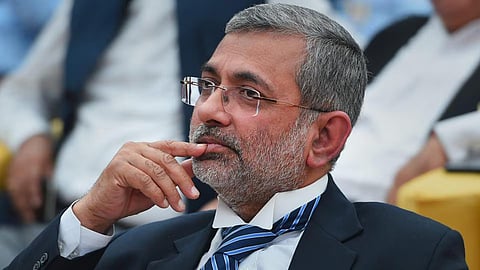
On November 6, the C Joseph Vijay-led TVK government discontinued the High-Level Committee on Union-State Relations headed by former Supreme Court judge Kurian Joseph. It handed the panel’s unfinished work to the State Law Commission. The DMK, which had set up the committee just months before the election, has raised an uproar, calling it a surrender of Tamil Nadu’s rights. A few dozen retired bureaucrats have signed a petition in protest. The issue may sound grave and deep, but it is constitutionally, politically and ethically shallow.
One, the committee was not created by the Constitution or by an Act of the Assembly. It was set up by a DMK government order, under the state’s Executive power, as an advisory body. What one government order creates, another can end. No statute, court ruling or convention obliges an elected government to keep the advisory machinery of the government voters have just replaced. If anything, when people have voted overwhelmingly for change, it is democratically incumbent on the new government to review Executive decisions of the previous government.
Two, politically, the discontinuation garners even more merit. One member of the committee and his family are deeply entrenched in DMK’s politics, even contesting elections on a DMK symbol. Laudably, he realised the conflict and resigned from the committee soon after the people’s verdict for change. This is the clearest acknowledgement that such a committee to speak for TN’s rights must not only be but also perceived to be beyond political partisanship. Another member of the committee was known to be closely associated with the previous Chief Minister for long, well beyond his bureaucratic career. None of this diminishes their scholarship. It only makes a new government’s wariness rational. Part I of the report was tabled in February, weeks before the Assembly election, and the DMK campaigned on it.
Three, all these may still have been palatable had the political climate in the state not turned so acrimonious, with the DMK leadership even exploring a dalliance with their arch enemy AIADMK to prevent the TVK from coming to power. A party willing to contemplate a pact with its lifelong adversary to block a mandate cannot expect its successor to treat its hand-picked panel as a neutral arbiter. It is hypocritical and foolhardy to ignore this political cloud of mutual suspicion between the TVK and the DMK. Governance in a democracy happens in a certain political context, not in a vacuum that bureaucrats and political theorists pretend to believe.
Four, the most dishonest charge is that ending the committee means abandoning the cause itself. Federalism is a constitutional principle. A committee is a tool. The Kurian Joseph report’s Part I—on governors, delimitation, GST, education and language—is on the record. Its papers go to the Law Commission, reconstituted in August with a mandate that includes Centre-state relations. The arguments do not die because a government order is withdrawn.
Five, what the DMK really objects to is losing its monopoly over the vocabulary of state rights. That vocabulary never belonged to one party. When the panel was announced in April 2025, the AIADMK too stood with the DMK on state rights in the Assembly. Federalism belongs to TN, not to any party’s letterhead. Only partisan reasoning can equate the life of one committee with the fate of the cause.
None of this makes the cause less urgent. The case for fiscal, constitutional and political federalism has never been stronger.
The visceral attack on India’s federalism in the last decade by the Modi government has extracted a huge price from all states. It has cost TN about ₹26,000 crore—the amount TN would have received had the central government kept cesses and surcharges, which it does not have to share with states, at their UPA-era share of tax collections.
In 2014-15, 89.1 percent of the Centre’s gross tax revenue was shareable, which fell to 74 percent under Modi. Cesses and surcharges have roughly tripled in the last decade. This robbed states of their legitimate share of cash. In TN’s case, it lost more than a full year of the state’s entire health budget. This is fiscal federalism loot.
Parents of roughly 4 lakh students in state universities are eagerly waiting to watch their children adorn a robe and collect their degree. They are unable to experience this joy and the students are going through the misery of not being able to collect their degrees because the Modi government is insisting on six stanzas of ‘Vande Mataram’ and not the Tamil anthem being sung at the convocation function of state universities in Tamil land, presided over by an anointed Governor as the de facto chancellor. This is Modi’s federalism robbing youth of their futures.
This makes the case for fighting for states’ rights stronger. Which is what the TVK government promises to do. This preaching by the DMK ecosystem of politicians, retired bureaucrats and media, that the only way to safeguard TN’s rights is by its own committee, is rich and hubristic. As the voters of Tamil Nadu told us.
Praveen Chakravarty | Congress MP from Tamil Nadu
(Views are personal)
(On X at @pravchak)
