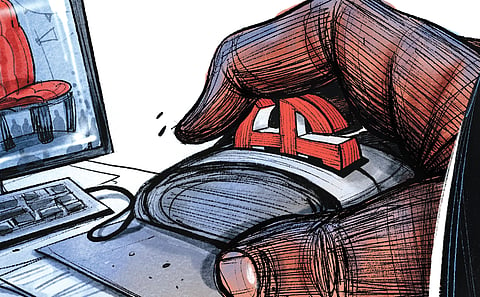

The world over, elections have tended to tread familiar conservative paths with some circumspection, if not reluctance, in turning to technology. By and large, conventional methods seem to be the comfort zone for election managers and stakeholders. Even tech leaders such as South Korea, Japan, Israel, Sweden, and most European and North American countries still use paper and pen for voting in national elections, not to mention many other Asian countries. The Netherlands, Italy, Ireland and a few others contemplated electronic voting machines in the first decade of this century and even tried them out, but they later abandoned the idea on grounds of high cost or lack of broad public and political support. Electronic machine-voting was briefly attempted in Germany before being struck down by the country’s Constitutional Court.
Quite a few countries have machine-based elections at the provincial or local levels. A few use technology for biometric voter registration and for vote counting. Among the countries that do employ electronic voting, Estonia has gone a step further with the added option of internet voting.
India was one of the early birds in adopting technology for elections. The idea of a voting machine was mooted by the Election Commission as early as in 1977, and a prototype of what later evolved into the present electronic voting machine (EVM) was first presented in 1979. We introduced EVM on a pilot basis in 50 polling stations of an Assembly constituency in Keralam in 1982. Electoral roll, the base document for elections, were computerised by the end of the last century. The focus here is not on technology per se, but on its role-limitation in the Indian election law framework.
Our EVM was designed as a direct-recording, standalone machine, an electronic mirror image of ballot voting, retaining all checks and balances of paper ballot including secrecy of ballot and post-election auditability of vote, should a court require it in an election-related litigation. The paper trail of vote was later added to aid physical verification by the voter.
It is a different matter that a number of opposition parties still do not seem to be convinced about electronic voting and the demand for returning to paper ballot is almost an ongoing campaign. It’s interesting to recall in this context that a current leader of the ruling BJP who was also a member of Parliament had, in 2010, authored a book titled Democracy at Risk: Can we trust our Electronic Voting Machines, with a foreword by a founder-leader of the party.
While the voting machine has always been a punching bag and continues to be so, the technology used for electoral rolls has not attracted any noticeable dissent. The recent controversy surrounding the special intensive revisions and the resultant scrutiny from various quarters have put the IT component of electoral roll management under the spotlight along with several other issues.
The Representation of the People Act, 1950 and the Registration of Electors Rules, 1960 constitute the legal architecture for preparation and revision of electoral rolls. The Supreme Court held in a 1971 judgement that the 1950 Act and the amplitude of its provisions show that the entries made in an electoral roll can only be challenged in accordance with the machinery provided in the Act, and not in any other manner or before any other forum unless question of violation of provisions of Constitution is involved.
When the SIR operations in West Bengal last year were spiralling out of control and threatening to create chaos, by an extraordinary direction of the Supreme Court, judicial officers and tribunals were entrusted with the job of deciding claims and objections and appeals in the exercise. They temporarily replaced the regular civilian officers appointed for this purpose in terms of the 1950 Act and the 1960 Rules. Except for this unusual arrangement, it is well recognised that the Act and the Rules govern the ecosystem of electoral rolls.
Reference in the Act and Rules to the use of IT in electoral roll is primarily for the limited purpose of enabling filing of claim and objection applications electronically to the electoral registration officer (ERO) whose exclusive domain is to decide the applications in accordance with the law and to reflect the decision in the electoral roll with suitable addition, deletion or correction in the roll. The decision of ERO on an application made to him cannot be substituted by that of any other person or authority although appeal lies against the ERO’s decision.
Technology can never be a roadblock in the discharge of this important responsibility by ERO which directly impacts a sacred constitutional right of citizens. The recently reported case of Goa about some EROs failing to make additions in the roll in the case of some eligible electors due to inability to access the IT platform is intriguing. The fact that the number of electors involved in this case is small should not diminish the significance or seriousness of the matter.
Deletion of names from the roll calls for even greater degree of caution. For preventing applications from random sources, the law restricts the right to file a deletion application (Form 7) to a person enrolled in the roll of the same constituency. The only other manner for setting in motion the process for deletion of name from the roll is when the local ERO considers that ineligible persons have got into the roll in which case he/she can initiate suo motu action to remove the names after due process of notice and opportunity of personal hearing.
There is a recent report about 16 lakh appeals pending disposal in West Bengal filed against inclusion of names. While the number itself may raise some eyebrows, it is the lack of clarity about the source of these appeals that adds to the mystery. The question whether these appeals are also system-generated or algorithm-based similar to the controversial “logical discrepancies” cases at the earlier stage will be a matter of great interest.
The EC, in a recent press release, has announced its intention to review the ECINET system for its compatibility with the provisions of law. Technological solutions in our context cannot in any manner override, much less arm-twist, legal provisions. Technology may, at best, be a friend, but not an overbearing guide or philosopher chartering the course for statutory authorities.
K F Wilfred | Former Senior Principal Secretary, Election Commission of India
(Views are personal)
