
The timing and implications of a decision are often more eloquent than any speech. This week, the Netherlands and Norway—two Nato allies located about 900 km apart along the North Sea—made moves that say more about how nations, even allies, now view America and the unravelling of geopolitics.
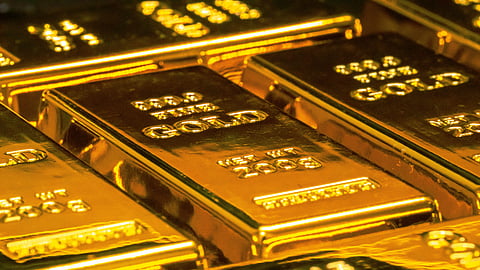
The Netherlands moved 86 tonnes of gold out of New York and Ottawa to London. De Nederlandsche Bank (DNB) did not shy from its reasoning. It said, “In view of increasing geopolitical unrest, DNB is strengthening its crisis preparedness.” DNB President Olaf Sleijpen observed, “With this relocation, we have improved the tradability of our gold reserves.” A portion was sold in New York and repurchased in London. Both the method and the destination matter.
North of the Netherlands, Norway’s sovereign wealth fund will be offloading around $80 billion in US Treasury bonds. The Norges Bank Investment Management cut its exposure to government bonds from 70 percent to 50 percent after assessing geopolitical and concentration risks. The NBIM stressed “broad diversification as a strategy in a changing world”.
One country is moving its metal away from the US; the other is distancing from American paper. Neither is a protest. Both air the same anxiety and ask the same question using different assets. It’s about the risks of financial security imposed by unravelling geopolitics. And they are not alone.
France sold 129 tonnes of gold held at the New York Fed and replaced it with gold in Europe, leaving no French central-bank gold in New York. Germany, with the world’s second largest reserves, moved 300 tonnes in recent years to hold 50 percent of its gold at home. The Reserve Bank of India doubled its gold reserves stored at home to 77 percent of its 880 tonnes.
Gold is one half of the story. The other is the US Treasury. China’s holdings have fallen from $1.1 trillion pre-pandemic to $633.4 billion. China has not dumped the Treasury—it is simply deploying its surplus in gold, materials and, speculation has it, in AI-adjacent equity. Japan, the largest foreign holder of American paper, has cut its holdings from $1,239.3 billion to $1,116.7 billion, moving the surplus homewards as yen-denominated yields rise.
The old assumption is weakening—that the world would recycle its dollars into American government debt indefinitely, at whatever price Washington required. Scaffolding that sentiment is fiscal profligacy—US federal debt has crossed $40 trillion, and the 30-year yield is above 5.25 percent. As one of the US Federal Reserve governors, Christopher Waller, observed, “The safety premium for Treasuries is gone.”
At an individual level, these decisions are about national reserves and savings. Collectively, they symbolise disquiet and a quiet rewiring of global trust. It would be tempting to dub this as de-dollarisation, but it would be premature. The dollar accounts for roughly 58 percent of global reserves and denominates much of world trade. The operative term is de-risking or de-concentration, if you please.
Over a century back, J P Morgan told the US Congress memorably that credit rests on character, not gold—the pre-1914 world’s faith that trust between men outranked metal. That faith is precisely what sanctions and asset freezes have broken, which is why reserve managers now want the metal—it is the vintage hedge they’ve returned to. In the past five years, central banks have bought over 4,500 tonnes of gold, with over 289 tonnes in the second quarter of 2026 alone.
Gold trades around $4,475 an ounce. Investors wait for an entry point. Central banks are paying historic prices for an asset that pays no interest, produces no coupon and costs money to store. They are buying what yield cannot deliver: optionality. A Treasury security is a claim on an issuer. Gold is not. In times of turbulent geopolitics, the appeal of an asset with no issuer is obvious.
John Maynard Keynes had trolled the gold standard as a barbarous relic. But tradition has become a tactic—and the tactic now has an econometric footprint. A 2023 IMF paper, pointedly subtitled A Barbarous Relic No More? and co-authored by Serkan Arslanalp, tested what moves the gold share of central bank reserves. Turns out that gold rises with economic, financial and geopolitical volatility. Sanctions prop up the price—the highest jumps in gold reserves are in sanction-wary States like Russia and China. Since 2000, Russia’s gold reserves went from 384 tonnes to 2,333; China’s from 395 to 2,280. Countries locked out of other systems choose gold. It carries no credit risk and can hedge against sanctions.
The freezing of roughly $300 billion of Russian central bank reserves after the invasion of Ukraine was the hinge. No country has converted financial infrastructure into foreign policy on the American scale. Sanctions can freeze assets, bar transactions, cut banks out of dollar-clearing and close US markets. Janet Yellen cautioned in 2023 that the rising use of sanctions creates a desire—in Russia, China and Iran—to find an alternative. Targets and bystanders alike now seek insurance. And insurance means gold.
As Alan Greenspan told the US Congress in 1999, fiat money, in extremis, is accepted by nobody. “Gold is always accepted.” Insurance could also translate into local-currency settlement, common-currency proposals, bilateral swaps, alternative payment rails. Tariffs—used by Donald J Trump to extract concessions—have expanded the need for insurance as the line between trade policy and geopolitics has dissolved. The weaponisation of sanctions manufactures the demand for the shield.
Morgan told Congress that credit rests on character. For half a century, the world extended America that credit on trust. It is now buying insurance against the day it might need to stop doing that. Every tonne brought home is a premium paid. And yes, the gold is coming home.
Read all columns by Shankkar Aiyar
Author of The Gated Republic, Aadhaar: A Biometric History of India’s 12 Digit Revolution, and Accidental India
(shankkar.aiyar@gmail.com)
