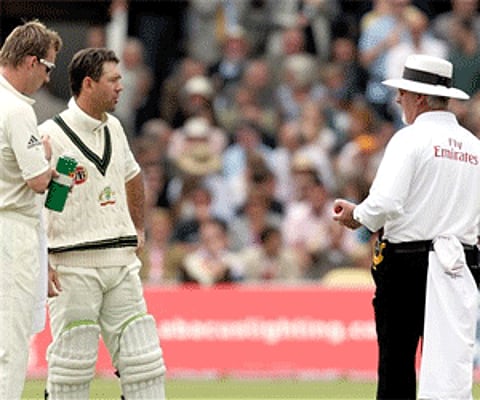

LONDON: The ICC today clarified the rules relating to referrals of low catch decisions to the third umpire after a row erupted in the second Ashes Test here, saying that the on-field umpires have the authority to decide which catch to refer to. On the third day, Rudi Koertzen and Billy Doctrove referred a catch claimed by Australia''s Nathan Hauritz off Ravi Bopara to third umpire Nigel Llong.
The replays were inconclusive and Llong ruled in Bopara''s favour. Then on the fourth day, England captain Andrew Strauss claimed a low slip catch to dismiss Phillip Hughes.
This time there was no referral with Koertzen and Doctrove deciding Hughes was out without referring to Llong. International Cricket Council (ICC) Test-match playing regulation state "the umpire at the bowler''s end shall be entitled to refer an appeal for a caught decision to the third umpire if both he and the square-leg umpire are unable to decide whether a catch was taken cleanly".
ICC match referee Jeff Crowe said in a statement that the two on-field umpires have the authority to decide which catch they thought fit to refer to the third umpire. "There has been some confusion as to why one incident was referred and not the other.
It is simply a question of whether either on-field umpire is able to make the call himself or needs advice from third umpire. If he is confident of the decision then he will make it himself regardless of how near or far away the incident took place," Crowe said.