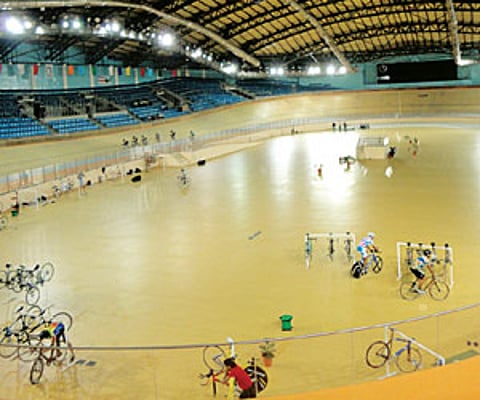

CHENNAI: The 2010 Commonwealth Games in Delhi appears to have been a colossal waste of public money with huge stadia and sports complexes lying unused. The cycling velodrome at the Indira Gandhi Sports Complex has not been used for any cycling event since then, the Cycling Federation of India failing to utilise the world-class facility at its disposal. There are examples galore, but on the brighter side, infrastructure has paved the way for future sporting mega events in the country.
IIM-Shillong and IIM-Calcutta released reports on the sports infrastructure scenario in India at the recently concluded India International Sports Summit in Mumbai. IIM-Calcutta’s study delved into the status and improvement needed in existing infrastructure. A white paper released at the summit suggested that sports infrastructure be created in every village, town and district. Anindya Sen, HoD, Economics, IIM-Calcutta, said: “Since the necessary amount for the development of sports facilities is humongous and the government’s budget and expertise limited, involvement of private sector is the only viable solution.”
IIM-Shillong’s paper focused on sports facilities in various schools and its research showed that 80 percent of teachers believe that sport is an integral part of school education system.
Yet 90 percent of Indian schools have neither sufficient sport infrastructure nor funds to support sports activities. Sample areas were Delhi, Karnataka, Gujarat, Haryana, Meghalaya, West Bengal and Manipur. It is startling to note that annual spending for sports per student varies between `2 to `250 and according to Udit Sheth, MD & CEO, TransStadia, one way out is to grade sports activities in schools.
“Student participation should be rewarded by extra credits or marks which can be the most lucrative incentive at that level. This surely will ensure enthusiastic involvement and a holistic development,” he said.
Since initial investment has already been made to develop stadiums, operating cost of sports facilities would be huge and this is where private companies can team up with the government (state and central) for maintenance.
A step in the right direction is the announcement of a deal between the Sports Authority of India and the All India Football Federation (AIFF) to allow AIFF to hold their matches at the SAI’s Jawaharlal Nehru Stadium football field in lieu of a one-time investment to bring the quality of the field to world-class.
