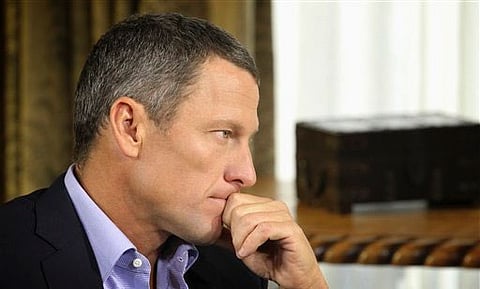

Lance Armstrong may have been branded liar and cheat of themonth, but experts say he's not as different from the rest of us as we'd liketo believe.
Lying, they say, is part of the human condition, somethingmost people do every day. And that's reflected in the cavalcade of celebritiescowed into confession after their deceptions were exposed — from RichardNixon's denial of the Watergate break-in to Bill Clinton's denial of an affairwith an intern, from drug-abusing baseball players to fraudulent Wall Streetexecutives.
"The world is rife with great liars," says RobertFeldman, a professor of psychology at the University of Massachusetts whostudies lying and deception. "Nothing about the Lance Armstrong case isshocking. We all lie every day. We live in a culture where lying is quiteacceptable."
The husband who says he is working late when he is having anaffair. The worker who takes long-term disability for a serious injury, only tobe found puttering around the golf course. The guy who says his car broke downbecause he is late for work. The dog who ate your homework.
People lie to protect their self-image," Feldman says."Once they've told a lie, they are in it, they live in it, and theyjustify hurting others to protect the lie because they don't see any wayout."
People who live a deception at the level of Lance Armstronghave what Feldman calls the "liar's advantage" because they aretelling us what we want to believe.
"We want to believe Lance Armstrong was a greatsuperhero who overcame cancer and went on to win Tour de France after Tour deFrance," Feldman says. "We always want to believe in the greatcomeback story."
Armstrong, he says, was unusually energetic in trying tosilence the opposition and damage his critics — a trait that, in the end, mightbe viewed as less forgivable than his lying.
"Lying is extraordinarily common and we couldn't getalong without it," says David Livingstone Smith, a professor of philosophyat the University of New England in Maine, and author of the book "Why WeLie." ''It greases the wheels of society."
Lying, Smith says, "is as automatic and unconscious assweating." He points out that parents teach children at an early age that"it's OK to lie, just not to me." Kids are told to pretend to begrateful for a Christmas gift they don't want. And they witness their parentslying — about the tooth fairy, and the Easter Bunny and Santa Claus.
Wise people throughout history have understood that lyingand deception is part of life, Smith says: "There is no commandment that says'thou shalt not lie,'" though there is a commandment against bearing falsewitness.
Dan Ariely, professor of psychology and behavioral economicsat Duke University's Fuqua School of Business, has spent years studying whypeople cheat. He is the author of a book, "The Honest Truth AboutDishonesty: How We Lie to Everyone, Especially Ourselves."
People basically try to do two things at the same time,Ariely says. "On one hand, we want to be able to look in the mirror andfeel good about ourselves. So we don't want to cheat. On the other hand, we cancheat a little bit, and still feel good about ourselves."
He doesn't judge Lance Armstrong as being any different — orworse — than the rest of us. He cheated in a bigger way because the stakes werehigher, and the system allowed him to do so. All cheaters, whether big orsmall, have a huge ability to rationalize their actions as they manipulate thesystem, Ariely says. "They say, 'Everyone one else was doing it' or 'Itwas for a good cause.'"
In Armstrong's case, Ariely says, the fact that he hadsurvived cancer and won the Tour de France multiple times and become aninternational role model gave him a huge incentive to justify his cheating andperhaps even believe that it actually helped him in his good works.
Most people start off lying or cheating in a small way,Ariely says, and feel nervous about their deception at first, a feeling thatdissipates the more they continue.
Ariely tells of another world-class cyclist he interviewedwho started using performance enhancing drugs not because he wanted to win, butbecause he simply wanted to catch up. He felt it was justified because everyoneelse was doing it. He wound up enmeshed in a spiral of lies and drug use, andeventually a drug selling scandal that led to his downfall.
"He was a classic case of, 'I will just do itonce," Ariely says. "But then it became the slippery slope where thelies got bigger and the cheating more common and in the end he gotcaught."
"Ordinary people can become extraordinary liars,"says Bella DePaulo, visiting professor at the University of California in SantaBarbara, who studies deception.
In the 1990s, DePaulo and her colleagues monitored more than100 people between the ages of 18 and 71 who kept a diary of all the lies theytold over the course of a week. Most people, she found, lie once or twice aday, "everything from the little compliment to spare another person'sfeelings to a self-serving statement that exaggerates their own importance, totrying to get a raise or a better deal on a car."
But serious and long-term deception, DePaulo says, requiresmore planning — and help. She cites the case of journalist Stephen Glass, whofabricated articles for The New Republic in the 1990s, making up characters andquotes and even events. Like other great liars who managed to continue theirdeception for years, DePaulo says, Glass had enablers — people who wanted tobelieve he was as talented as he pretended to be.
Liars can only sustain those kinds of deceptions, DePaulosays, if they get others to invest — wittingly or unwittingly — in their lie.
"Your lies are going to have longer legs when peopleinvest in you and look up to you and don't want to hear that you may have beena lying, cheating, scum all along."
Armstrong, she says, had something else — the power to makelife miserable for those who threatened to reveal him.
Although Armstrong's ruthlessness makes his cheating seemmore extreme, he can't simply be dismissed as one bad apple, Ariely says. Andwhether the cyclist will eventually find some kind of redemption is irrelevant.
Ariely believes the only good that can come out of the caseis if society uses it to examine standards in everything from sports tobusiness, to create new systems where cheating becomes completely unacceptableand a mea culpa to Oprah is not considered the road to forgiveness.
But he doesn't hold out much hope. "Look at thebankers," he says. "They all said sorry and nothing changed."