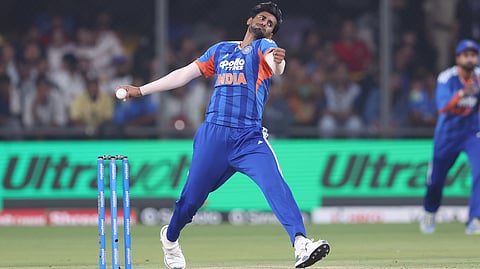

CHENNAI: Making an India comeback after a back surgery is not easy. It becomes more difficult if the player is a fast bowler known for clocking 150kmph more often than not.
After grabbing headlines for his searing pace during a sensational Indian Premier League debut in 2024, Mayank Yadav was the toast of the nation. For a country that rarely produces an out-and-out fast bowler, Mayank was one for the future. But injuries derailed the pacer's career: since that fearsom IPL debut in 2024, he has managed to play only six IPL matches in two seasons and three T20Is for India before undergoing a back surgery in New Zealand last year.
And that's when the tiresome and tough journey started. Mayank spent over eight months at the BCCI's NCOE under the watchful eyes of experts including physiotherapists, trainers and coaches.
A lot of hard work went into the process before Mayank returned to action in July this year and bamboozled Zimbabwe's Brian Bennett off his first delivery. He finished with impressive figures of 2/18 from his quota of four overs and won the Player of the Match award. And he is continuing his form even on placid tracks, which are on offer for the ongoing five-match T20I series against West Indies, when almost every bowler is being hit left, right and centre.
Even as the 24-year-old deserves praise for his exploits on the field, especially after a career-threatening injury, credit should also be given to experts at the NCOE who made it possible by working alongside him 24x7 for almost nine months. A source, who witnessed the process, shared what went behind the scene to make Mayank as menacing as he was before going under the knife.
"It's a long process. Players like Mayank are kept in the RTP (return to play) bracket," the source said. Elaborating the process, he said: "Rehabilitation starts with the designated physio equipping himself with all data related to the player. Even a minor detail is not missed. The physio talks to player's physios of the state, IPL and any other teams he turns up for. Then they get the data from the GPS vest the player wears. It gives him details of distance covered by him and at what speed. His intensity and workload. More importantly, it gives him benchmarks when that player returns from injury."
Once that process, which takes more than a fortnight and close to a month, is over, a weekly programme is handed to the trainer, who in turn starts with a low intensity training. "The bowler starts with one or two overs with 50 per cent intensity. It begins at closed nets and moves to open nets gradually. It's a long process and doesn't get completed in a week or two. Slowly, the trainer starts match simulations. Every session, the speed of the bowler is measured. In Mayank's case they must have done that till he started clocking 140kmph," added the source.
Given the scientific approach it adopts, the NCOE has a vast data of players and every bit of it is used when a player comes in there. "Basically, the players are divided into two categories — contracted players and targeted players. Then a separate coach is assigned to each category. In case there are more players in one category, more coaches and experts like physios and trainers are assigned. For the sake of continuity, similar physio, trainer and coach see a player's progress and the Mayank case was no different."
All those efforts bore fruit when Mayank reduced West Indies to 2/5 in the very first over of the second T20I in Ranchi. India might have lost the match with their opponents completing their highest run chase and second highest in the history of the format but Mayank was the silver lining for the Men in Blue as he claimed 3/36 in his three overs. And Shreyas Iyer and Co will want their pacer to continue with his sublime form not only in the ongoing series but way beyond it as Mayank has the ability to unsettle any batter only with his sheer pace.
Long road to recovery
Return to play (RTP)
Mayank was put in RTP when he started his rehabilitation at the NCOE
Data collection
A physio first collected all available data on the pacer. He spoke to his physios from state, IPL and other teams he played in the past. Data from his GPS vest proved important as it gave them objective benchmarks to help the player make a successful return post injury.
Programme
Once the physio is equipped with all required data, he hands over a programme to the trainer. The trainer in turn starts with a low intensity session and gradually increases it depending on the player's progress.
Closed to open nets to match simulation
The training begins in closed nets and slowly moves to open nets. Once the trainer is satisfied then he starts giving match simulations to the players.
