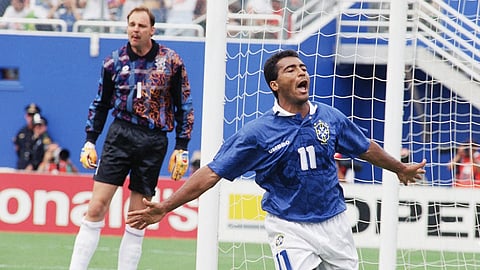

A look at differences between the 1994 World Cup, the first in the United States, and the 2026 tournament, which will be played in the US, Mexico and Canada from June 11 through the final on July 19:
Ticket prices
1994: Ticket prices ranged from $25 to $75 for first-round games ($40-$120 for the opener), and from $180 to $475 for the final at the Rose Bowl in Pasadena, California.
2026: When FIFA put individual game tickets on sale in December, prices ranged from $140 to $2,735 for first-round games and from $4,185 to $8,680 for the final. This was the first World Cup with so-called dynamic pricing, meaning the price reflects real or perceived demand. FIFA raised the top price for the final to $10,990 in April.
Tournament size
1994: The tournament was the last World Cup with 24 teams. The field expanded to 32 in 1998.
2026: The tournament expanded again to 48 this year when a new round of 32 was established. The finalists will play eight games, up from seven.
Field size
1993: At the time, FIFA specified fields had to be 68-by-105 meters (74-by-115 yards) but allowed stadium operators to ignore that and keep narrower pitches.
2026: This time, stadiums have been modified to meet the standard.
Attendance
1994: The tournament drew a record 3.59 million, an average of 68,991 for 52 games.
2026: With twice as many matches this year, attendance of 6 million to 7 million is likely.
Geographic scope
1994: The 1994 tournament was played in nine stadiums, all in the US The opener was played at Soldier Field in Chicago.
2026: This time, 16 stadiums are being used: 11 in the US, three in Mexico and two in Canada. All games from the quarterfinals on will be in the US No Chicago this time: The city wasn’t interested, citing what it said was a lack of financial assurances by FIFA.
How suite it is
1994: The tournament used five NFL sites, including the since-demolished Giants Stadium, Foxboro Stadium, Pontiac Silverdome and RFK Stadium.
2026: The 11 US venues are all NFL stadiums with ample luxury suites and premium seating. Among the 1994 venues, Soldier Field remains along with the Rose Bowl, Cotton Bowl, Citrus Bowl and Stanford Stadium. None of those are being used for this World Cup.
Water breaks
1994: Teams played straight through in weather that at times was hot and humid.
2026: It will be hot and humid again, but this time games will have three-minute water breaks in each half, which coaches are likely to use as quick strategy sessions.
Substitutes
1994: Teams were allowed two substitutes, a rule first introduced for the 1990 tournament, and a new provision allowed a third for an injured goalkeeper or a keeper who received a red card. A third substitute was allowed starting in 1998 and in the event a game went to extra time, a fourth in 2018.
2026: Starting in 2022, each team may use five substitutes with a sixth possible in extra time and another at any point to replace a player who sustained a concussion.
Name game
Player names were added to jerseys for the 1994 tournament and have become standard in soccer. Uniform numbers became mandatory for the 1950 World Cup and fixed numbers that stayed the same throughout the tournament started in 1954. Numbers on shorts were required starting in 1974 and on the fronts of jerseys in 1994.
Who’s in charge?
1994: A local organizing committee largely ran World Cup arrangements through the 2022 tournament; World Cup USA 1994 was headed by Alan Rothenberg, a California lawyer who headed the U.S. Soccer Federation. Rothenberg traveled the country as chief salesman of the sport.
2026: FIFA is running this year’s tournament and its president, Gianni Infantino, has been most visible ingratiating himself with US President Donald Trump, even bestowing a FIFA peace prize to him.
