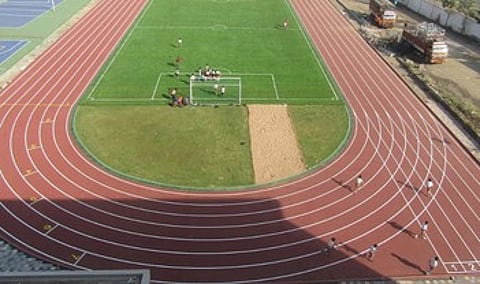

CHENNAI: AS the top brasses of the Athletics Federation of India (AFI) rounded off a 'gruelling' two-day Annual General Meeting (AGM) in Kohima, a few landslide reforms were put forth, including SRY gene tests for athletes competing in women categories and the obtaining of DNA samples to study athletes' muscle compositions. While these reforms may help Indian athletics progress, one of the major issues that the body has to address is the conditions of running tracks in the country. AFI spokesperson and World Athletics vice-president Adille Sumariwalla said that 'more than 90 per cent of the tracks' in India are 'substandard.'
"We had a meeting with World Athletics in Tokyo (last year). It was very evident from them that they were not happy with the quality, being certified. So AFI will now help in certifying and ensuring that all standards of measurement and quality are met," Sumariwala said in a press conference on Saturday.
For the record, according to the World Athletics website as on November 5, 2025, there are at least eight 'Class 1' tracks and more than 100 'Class 2' certified tracks in the country. The AFI, until instructions from the world body, were not involved in the tracks.
"From now, we (AFI) will have to get involved because World Athletics has called us and said, 'you need to get involved.' They showed us some data, which was quite shocking."
He explained the key issues of these tracks, beginning with the material being used. "The material used is substandard, the process is substandard, the granules used are substandard. The laying methodology is substandard, so the thickness is substandard. Instead of polyurethane, at places tire rubber is being used. There are various things that are issues with 90-plus percent of the tracks, including the measurements," he said.
The state athletic bodies are responsible for the upkeep of the tracks. For venues owned by the central government, the Sports Authority of India (SAI) is responsible for maintaining the tracks. Sumariwalla said that there have been no proper vendors in providing quality material.
"What is happening is that a lot of people are fly-by-night, they're not even proper vendors, so we need to look at the quality of the vendors. We will probably come out with a list of vendors who are genuine names worldwide and whose substances are to be used. Also, the sort of testing that is done on the track needs to be intensified. We actually conducted a course with foreign experts coming to India to make our officials understand how our tracks are to be measured and tested," Sumariwalla said, adding that the AFI is working on a mechanism to ensure tracks meet the standards.
The former Indian sprinter pointed out the inconsistencies in laying the tracks. "There are two different types of tracks. One are polyurethane tracks, one are polychloroprene (also known as neoprene) tracks. The way tracks are laid, they're completely different. One is an in-situ mix, which is laid on-site, the other comes rolled and is laid out like a carpet, etc, etc. So the experts who had come down explained to us how that is to be done. We have got a team of officials to attend that course," he added.
