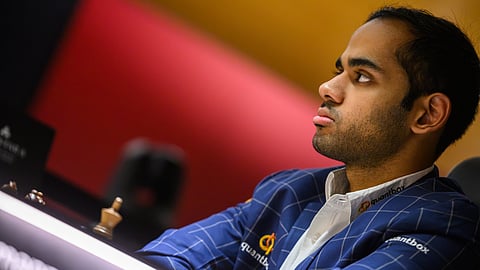

BUDAPEST: WEDNESDAY, in a way, marked a new beginning for the world of chess with the start of the opening two rounds of the pilot edition of the Total Chess World Championship. In a sense, the ultimate mind game also embraced a format not a lot of players have played before. Here's a detailed explainer on the 'fast classical' format, how different it is from the pure 'Classical format' and whether this could be a game-changer.
What's the fast-classical format?
At Total Chess, all group stage games will be played in the fast-classical format. Under this format, players will have 45 minutes against their opponent, plus an increment of 30 seconds per move from the first move. Because of the shorter time control, the 45+30 allows players to play two games a day. But it brings with it its own challenges.
How's it different from the classical format?
The traditional time control usually gives players a lot more time. It can be anywhere from 90 minutes to two hours (the World Championship, for instance, has two hours plus increments).
Does this mean players will have a fourth rating for 'fast classical'
This is where it gets interesting. Even if the format is known as 'fast-classical', for the purposes of official ratings, this will come under classical. And some players have privately expressed their displeasure that this competition in Budapest will count towards ratings even though this is a 'pilot' meet.
Why did the organisers opt for the fast-classical format?
Multiple official and unofficial reasons. Because of the way the competition is structured, with players expected to play two classical games in a day, it would have been impossible to ask them to play two traditional classical games per day, as a single game can last upwards of five hours. At 45 minutes, two games per day becomes that much more feasible. And it would be far easier to get somebody like Magnus Carlsen to commit to a full tour with a shorter time control.
Are there other reasons?
Yep, and it's something Kjell Madland expanded on during an interview with select Indian media. Madland, the brains behind the new tour, said the shorter time control would help in making the board game a broadcast-friendly product. "I think for us, it's important," Madland said. "We have a plan to get this on TV and other channels and also for social media. The new generations... follow this in another way when compared to fans (from an earlier generation). I think it's very important to have faster formats."
Rd 1 results (only Indians)
Arjun Erigaisi drew with Hans Niemann, Maxime Vachier-Lagrave bt R Vaishali, R Praggnanandhaa drew with Vincent Keymer
