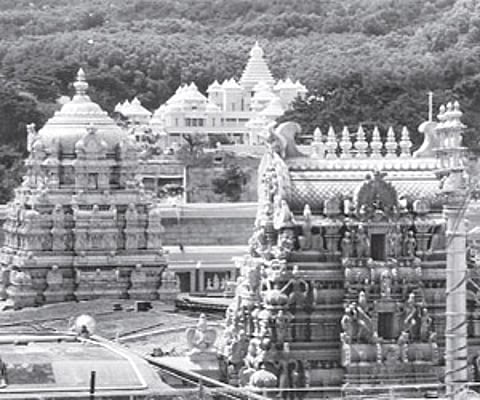

TIRUPATI: The temple town has witnessed rapid growth in population but that of infrastructure has lagged way behind, mainly, it is pointed out, on account of the absence of an elected local body to oversee things.
Tens of thousands visit Tirupati every day and head for the Lord Venkateswara Temple on Tirumala. On festive occasions the numbers run into lakhs.
Municipal Corporation status was accorded in March 2007 but, for some reason or another, there has been no election so far.
And, after delimitation, Tirupati Assembly Constituency has become almost coterminous with the corporation with the addition of two or three urban panchayats.
Occupying an area of 24 sq km, the town has 2.28 lakh inhabitants, and a floating population of 60,000 on average every day.
Congestion is worsening by the day, given the deluge of vehicular traffic from two metros -- Chennai and Bangalore -- and a host of other places.
The locals are fed up with the state of affairs and are running short of patience. Officials, for their part, say that measures like road-widening works have been dogged by legal hurdles. There is, of course, an upside.
The influx of pilgrims has brought spinoffs in respect of trade and commerce, the hospitality sector and travel-related service. But right now it is issues of urban development and civic infrastructure that are crying out for attention. What perhaps needs to be addressed first of all is lack of coordination between different stakeholders in the development of the town -- entitites such as the TTD, the Municipal Corporation, TUDA, RTC and Railways.
Tirupati constituency, an educational hub with six universities and numerous other institutions, has a population of 2.97 lakh as per 2001 Census with electoral strength of 2.33 lakh, the highest in the district. Its income is largely dependent on tourism, with 20 to 25 percent of the population engaged in business and commerce. Another 10 to 15 percent are daily wage earners.
The town has 42 slums whose population adds up to 94,057, and most of the inhabitants are migrants from different parts of the State. Even though drinking water, electricity or sanitation is not as bad as elsewhere, there is still scope for vast improvement.